Mold Inspection and Testing in Scotch Plains
24/7 mold inspection and testing in Scotch Plains, NJ. IICRC-certified, insurance billing accepted. Call (855) 650-7422.
Our IICRC-certified technicians are dispatched from our Fair Lawn, NJ headquarters and are typically on-site in Scotch Plains within 60 minutes of your call.
The mid-century split-levels and colonials packed into Scotch Plains’ Willow Grove and Ashbrook neighborhoods were built in an era before vapor barriers were standard practice, and many of them have spent decades slowly exchanging moisture between finished basements and the soil outside. When the Green Brook backed up during Ida in 2021 and low-lying streets near the Fanwood border flooded, a lot of those basements took on water that never fully dried — creating exactly the conditions where mold colonizes within 24 to 72 hours of saturation. If you’re noticing a musty smell, seeing discoloration on drywall or framing, or just want to know what’s actually in the air your family is breathing, a professional mold inspection and testing assessment gives you documented answers rather than guesswork.
Why Scotch Plains Properties See Elevated Mold Risk
The housing stock across the 07076 ZIP code tells a consistent story. Most of the residential neighborhoods were developed between 1950 and 1970, which means original cast-iron drain lines, galvanized supply pipes, and slab-on-grade or shallow-crawl construction that wasn’t engineered for today’s understanding of moisture management. Cast-iron drains corrode from the inside out — slow pinhole leaks behind finished walls can feed hidden mold growth for months before a homeowner notices anything. Older homes near Downtown Scotch Plains and along the Shackamaxon corridor frequently have original plaster walls over wood lath, which absorbs and holds moisture differently than modern drywall, giving mold more surface area to colonize before it becomes visible.
The Park Avenue and Route 22 commercial corridors add another layer of exposure. Flat and low-slope commercial roofs common along those stretches are prone to ponding water after heavy rain, and sprinkler-discharge losses in retail and office spaces can saturate ceiling assemblies that go uninspected for days. Whether the property is a 1962 ranch off Terrill Road or a strip-mall suite near Route 22, the underlying moisture dynamic is the same: water gets in, materials stay wet, and mold follows.
Our Mold Inspection and Testing Process
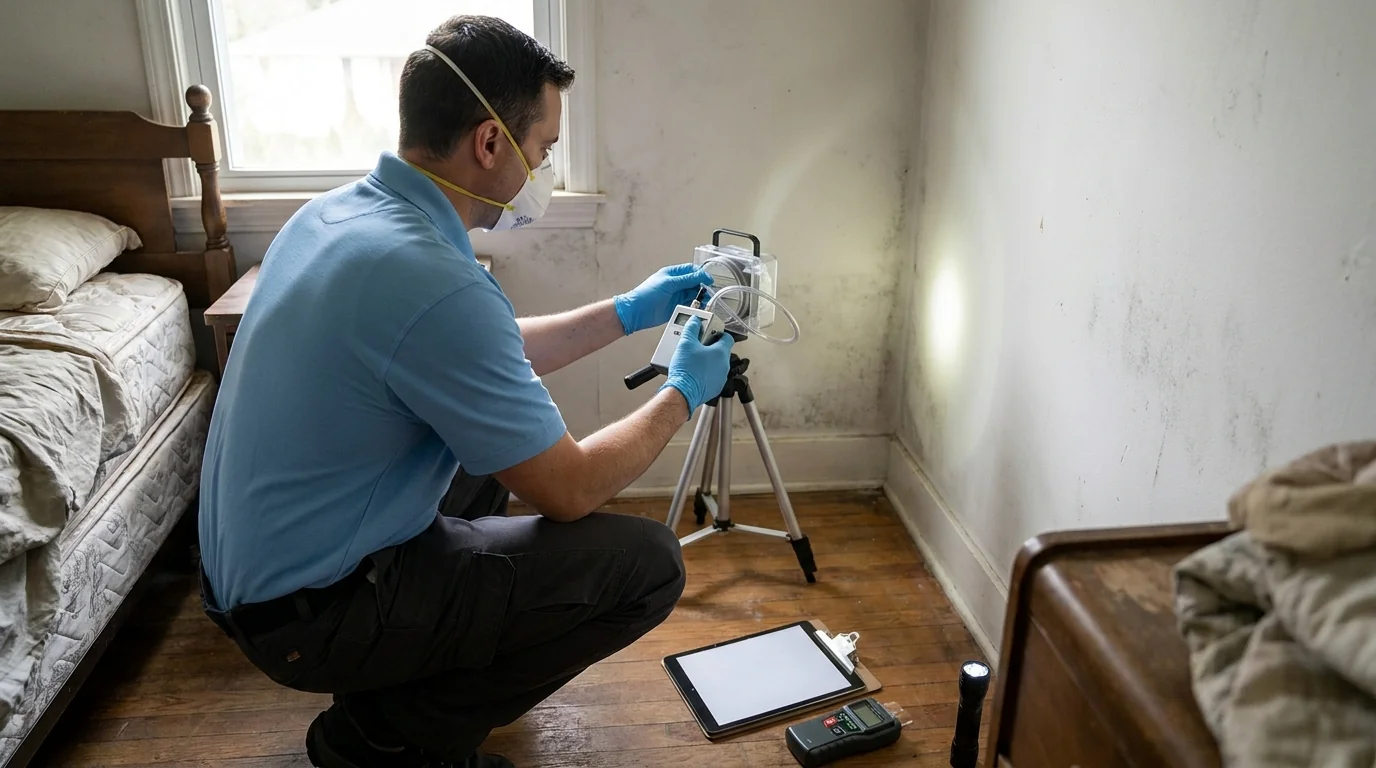
A thorough mold assessment isn’t a visual walk-through with a flashlight. The process starts with a detailed moisture survey using calibrated thermal imaging and non-invasive moisture meters to map wet building materials that aren’t yet showing visible growth. In Scotch Plains’ older homes, we pay particular attention to finished basement walls, rim-joist cavities, and the areas around aging supply-line penetrations — these are the locations where slow leaks hide longest.
Once the moisture map is complete, we collect air samples from affected rooms and an outdoor control sample, then send everything to an accredited third-party laboratory. The lab report identifies mold species, spore concentrations, and how indoor counts compare to outdoor baseline levels — the data your doctor, your insurance adjuster, or a potential home buyer actually needs. If surface sampling is warranted (for instance, to confirm whether a stain on a basement wall is mold or efflorescence), we collect tape-lift or swab samples from specific locations and include those in the lab submission. You receive a written report with findings, photographs, and a clear explanation of what the numbers mean.
The Restoration Group is an IICRC Certified Firm (#210213), and all inspections are conducted in accordance with current IICRC S520 guidelines for mold assessment.
Reaching Scotch Plains from Our Kenilworth HQ
Kenilworth sits just a few miles northeast of Scotch Plains, which means our team is not driving in from a distant regional office. We reach most Scotch Plains addresses quickly via Route 28 or Central Avenue, and because we operate 24/7, scheduling isn’t limited to business hours. If you’re dealing with an active leak or a post-flood situation where time matters, call (855) 650-7422 and we can get an inspection on the calendar the same day.
Local Note: What Ida Revealed About Basement Moisture in Scotch Plains
Here’s something we observed repeatedly after the 2021 flooding: many Scotch Plains homeowners whose basements flooded during Ida had the water pumped out and the floors dried — but never had the wall cavities or framing behind finished drywall tested. Finished basement walls in split-levels trap moisture inside the assembly, and if the insulation or wood framing behind the drywall stayed wet, mold can be well-established inside the wall long before it’s visible on the surface or detectable by smell. If your home is in one of the lower-lying areas near the Fanwood border or along the Cedar Brook drainage corridor and you haven’t had an inspection since that storm, the interior of your wall cavities may tell a different story than what you can see from the room.
If you’ve had any water intrusion — whether from Ida, a burst pipe, or a slow drain leak — and you want a clear picture of what’s happening inside your walls and in your air, call The Restoration Group at (855) 650-7422. We serve Scotch Plains and the surrounding Union County communities and can schedule a mold inspection and indoor air quality assessment at your convenience.
Serving Scotch Plains from our Fair Lawn headquarters — ★ 4.8 · 158 Google reviews
“Great customer service. I was kept well informed throughout the entire process. I received nothing but respect and sympathy from everyone I dealt with.” — Ryan, July 2026Read our reviews on Google →
Mold Inspection and Testing in Scotch Plains: Service Coverage
Frequently Asked Questions
How fast can you arrive for mold inspection and testing in Scotch Plains?
Are finished basements in Scotch Plains' mid-century split-levels especially prone to hidden mold growth?
My home is near the Fanwood border in the 07076 ZIP code and flooded during Ida. Is it too late to test for mold from that event?
How does mold inspection work differently in older homes near Downtown Scotch Plains that have plaster walls instead of drywall?
What does the lab report from a mold air quality test actually tell me, and will it satisfy an insurance adjuster or home buyer?
Does The Restoration Group handle both the mold inspection and any remediation that's needed, and is there a conflict of interest in that arrangement?
Mold Inspection and Testing response in Scotch Plains
Most Scotch Plains calls see a technician on-site within 60 minutes from our Fair Lawn headquarters.