Mold Inspection and Testing in Plainfield
24/7 mold inspection and testing in Plainfield, NJ. IICRC-certified, insurance billing accepted. Call (855) 650-7422.
Our IICRC-certified technicians are dispatched from our Fair Lawn, NJ headquarters and are typically on-site in Plainfield within 60 minutes of your call.
The Green Brook and Cedar Brook don’t just flood streets in Plainfield — they leave moisture behind inside walls, under slabs, and in the deep finished basements that are a hallmark of the city’s Victorian and early-1900s housing stock. After Tropical Storm Ida soaked East Front Street and the brook-adjacent neighborhoods in 2021, many homeowners discovered mold colonies weeks later, long after the visible water was gone. If you’re noticing a musty smell, unexplained allergy symptoms, or discoloration on walls or ceilings, a professional mold inspection and testing assessment is the only way to know what you’re actually dealing with — and where it’s hiding.
Why Plainfield Properties Are Prone to Mold Problems
Plainfield’s housing stock is part of what makes the city worth living in — and part of what makes moisture management so complicated. The Van Wyck Brooks Historic District and the Netherwood neighborhood are dense with Queen Anne and Victorian-era homes, many of which still have original knob-and-tube-era electrical systems, cast-iron drain lines, and plaster walls over wood lath. When those drain lines fail — and they do, quietly, inside walls — water can wick through plaster and framing for weeks before anyone notices a stain.
The city’s topography compounds the problem. Low-lying areas near Cedar Brook and Green Brook collect groundwater after heavy rain, and Plainfield’s clay-heavy soil holds that moisture rather than draining it away. Finished basements, common throughout the West End and Sleepy Hollow neighborhoods, trap humidity against foundation walls. In a wet spring or after a plumbing event, relative humidity in those spaces can stay above 60% long enough for mold to begin colonizing porous materials — typically within 24 to 72 hours of sustained moisture exposure.
Commercial properties along the Front Street and Park Avenue corridors face a different pattern: aging flat roofs and sprinkler systems that can leak slowly for months before a tenant reports ceiling damage. By the time the water is visible, mold is often already established in the ceiling cavity above.
Our Mold Inspection and Testing Process in Plainfield
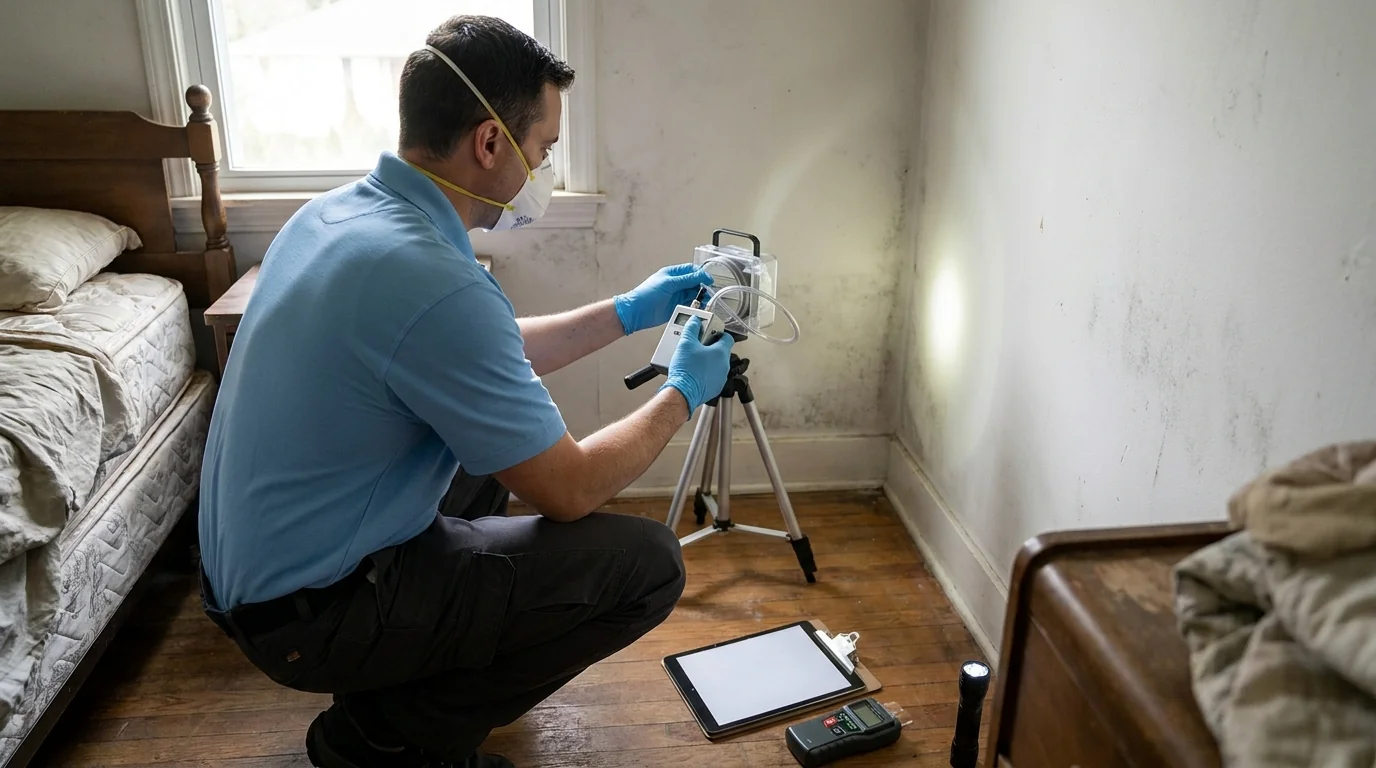
A mold inspection is not a visual sweep. Our process begins with a thorough walkthrough to identify moisture sources — not just staining, but elevated readings from a calibrated moisture meter and thermal imaging that can reveal wet cavities behind finished walls without opening them up unnecessarily.
When sampling is warranted, we collect air samples using calibrated spore trap cassettes and, where surface growth is visible or suspected, swab or tape-lift samples from affected materials. Samples are sent to an accredited third-party laboratory. Results typically return within 24 to 48 hours and include spore counts, species identification, and a comparison to outdoor baseline levels — the data your insurance adjuster, physician, or remediation contractor will actually need.
For older homes in the Van Wyck Brooks Historic District or along the Netherwood corridors, we pay particular attention to plaster-and-lath assemblies. Plaster absorbs and holds moisture differently than modern drywall: it can appear dry on the surface while harboring elevated moisture content — and active mold growth — inside the wall cavity. Thermal imaging is especially useful in these homes because it can flag temperature differentials that suggest hidden wet areas before we recommend any invasive sampling.
Our team holds IICRC Firm Certification (#210213) and operates under an NJ Licensed Home Improvement Contractor license through the NJ Division of Consumer Affairs. We’re available 24/7 at (855) 650-7422.
Reaching Plainfield from Our Kenilworth HQ
Our headquarters in Kenilworth sits a straightforward drive from Plainfield — typically via Central Avenue or the Route 28 corridor. We can reach most Plainfield ZIP codes, including 07060 and 07062, quickly, which matters when you’re trying to document a fresh moisture event before conditions change. For properties near the Plainfield Train Station or along the East Front Street corridor, we’re familiar with the parking and access constraints in that denser urban stretch and plan accordingly.
Because we’re local to Union County, we’re also familiar with the permit and inspection requirements that can affect remediation timelines in Plainfield — useful context when we’re helping you understand what comes after the testing phase.
Local Note: What Plainfield’s Finished Basements Hide
One pattern we see repeatedly in Plainfield — particularly in the deeper finished basements common to homes built between 1910 and 1960 in neighborhoods like Sleepy Hollow and the Crescent Area — is mold growth behind the finished wall panels rather than on them. Homeowners install drywall or wood paneling directly against the foundation block, sometimes without a vapor barrier, and over years of seasonal humidity cycling, the back face of that material becomes a mold substrate that’s completely invisible from the living space. The first sign is often an earthy or musty odor that gets stronger in humid months. If your basement smells different in July than it does in February, that seasonal pattern is worth investigating — it’s a reliable indicator that moisture is moving through the foundation wall and finding a surface to colonize.
If you’re in the 07060 or 07063 ZIP code and have questions about what a mold inspection involves or what to expect from the results, call us at (855) 650-7422. We’ll walk you through the process before we schedule anything.
Serving Plainfield from our Fair Lawn headquarters — ★ 4.8 · 158 Google reviews
“Prompt and professional work. Kept in contact thru out the process which was very important to me.” — F., July 2026Read our reviews on Google →
Mold Inspection and Testing in Plainfield: Service Coverage
Frequently Asked Questions
How fast can you arrive for mold inspection and testing in Plainfield?
Are homes in the Van Wyck Brooks Historic District more difficult to inspect for mold than newer Plainfield properties?
Plainfield saw significant flooding during Ida in 2021. If a home was affected then but never professionally tested, is mold still a concern now?
What does mold testing actually include — and how is it different from a visual inspection?
How does Plainfield's proximity to Cedar Brook and Green Brook affect mold risk in low-lying neighborhoods like Netherwood or the West End?
Will my homeowner's insurance cover a mold inspection for a Plainfield property, and do you help with that process?
Mold Inspection and Testing response in Plainfield
Most Plainfield calls see a technician on-site within 60 minutes from our Fair Lawn headquarters.