Mold Inspection and Testing in Millburn
24/7 mold inspection and testing in Millburn, NJ. IICRC-certified, insurance billing accepted. Call (855) 650-7422.
Our IICRC-certified technicians are dispatched from our Fair Lawn, NJ headquarters and are typically on-site in Millburn within 60 minutes of your call.
The West Branch of the Rahway River has a long memory. When Ida swept through downtown Millburn in 2021, it pushed water into basements, retail corridors, and the lower floors of century-old colonials faster than sump pumps could respond. Months later, many of those same properties were still dealing with the real aftermath: hidden mold colonizing wall cavities, subfloor assemblies, and the finished basements that make Short Hills and Wyoming-area homes so valuable — and so vulnerable. If you’ve noticed a musty odor, seen discoloration near a foundation wall, or simply know your property took on water at some point, a professional mold inspection and testing assessment is the only way to know what you’re actually dealing with.
Why Millburn Properties Are Particularly Susceptible to Mold
Millburn’s housing stock tells the story. The large Tudors and early-1900s colonials concentrated in Old Short Hills and Glenwood were built before modern vapor barriers, closed-cell insulation, and pressure-treated framing became standard. Their thick plaster walls, rubble-stone foundations, and unventilated crawl spaces create conditions where moisture lingers long after the visible water is gone. Cast-iron drain lines — common in homes built before 1950 — corrode and leak slowly inside walls, feeding mold colonies for months before anyone notices a stain.
The Rahway River corridor compounds the problem. Properties near Taylor Park and the Millburn train station sit in a natural floodplain that sees groundwater intrusion even in moderate rain years, not just during named storms. Finished wine cellars, home theaters, and multi-room lower levels — features that define the high-value estate homes throughout the 07078 ZIP code — give mold enormous surface area to colonize if a water event goes unaddressed or is only partially dried.
Our Mold Inspection and Testing Process in Millburn
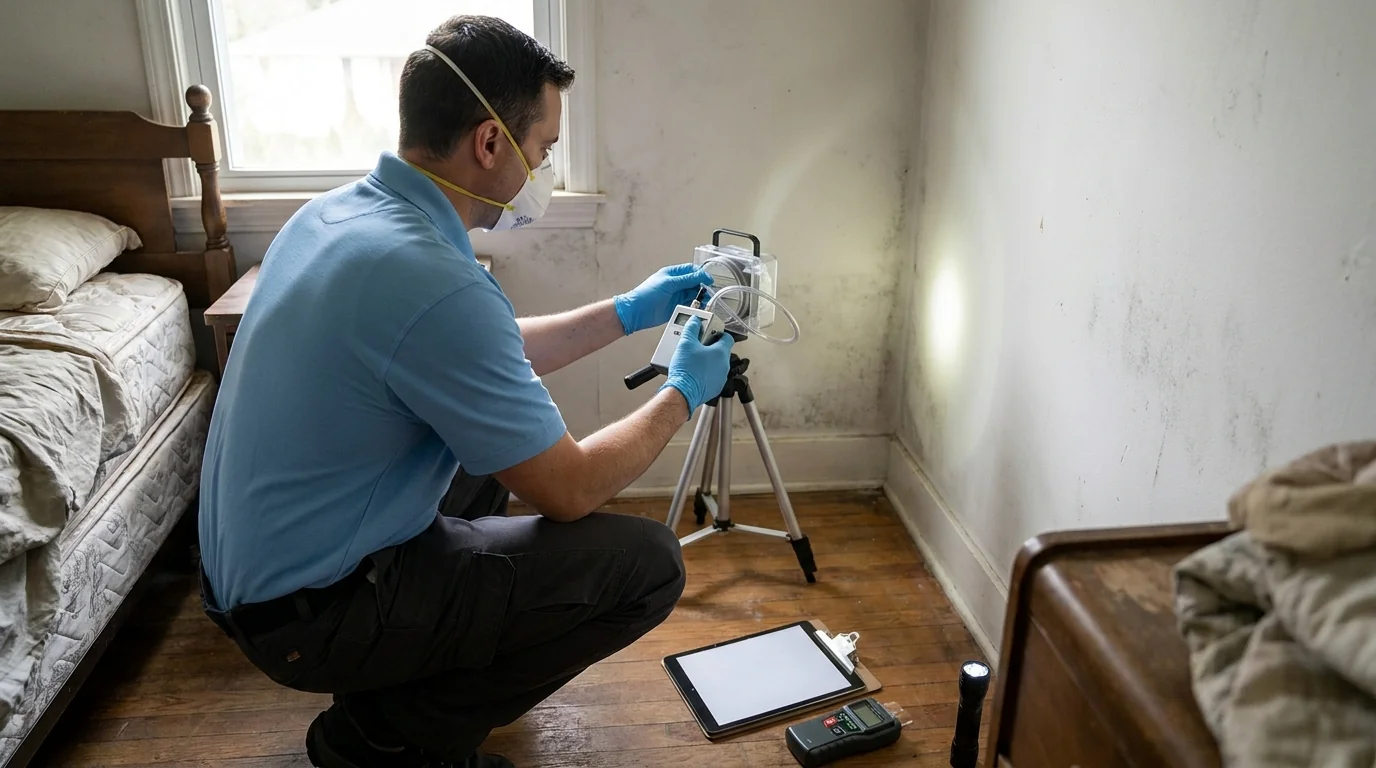
A mold assessment isn’t a single swab and a phone call. The process starts with a thorough visual inspection of the areas most likely to harbor growth: basement rim joists, HVAC air handlers, bathroom exhaust paths, and any wall or ceiling surface adjacent to a known water intrusion point. In Millburn’s older homes, that often means inspecting behind original plaster, inside unfinished utility chases, and around cast-iron stack penetrations where condensation accumulates.
From there, we collect air samples from affected rooms and an unaffected control area — typically an exterior doorway or a room with no known moisture history. Surface samples (tape lift or swab) are taken from any visible suspect growth. All samples are sent to an accredited third-party laboratory. Results come back with a full spore-count breakdown by species, which tells you not just whether mold is present but whether the indoor air quality is meaningfully elevated compared to outdoor baseline levels. That distinction matters when you’re deciding whether remediation is necessary or whether a targeted repair and monitoring plan is sufficient.
Because The Restoration Group holds IICRC Certified Firm status (#210213), the inspection follows documented protocols rather than a visual walk-through with a flashlight. We’re also NJ Licensed, which matters when inspection findings need to be presented to an insurer, a real estate attorney, or a municipal building official.
Reaching Millburn and Short Hills from Kenilworth
Our Kenilworth headquarters puts Millburn well within our primary service corridor. Route 22 to Springfield Avenue or the Garden State Parkway to Exit 142 both provide direct access to Millburn Center and the Short Hills residential areas. Because we operate 24/7, a call at midnight after discovering a flooded basement or a suspicious smell following a pipe failure gets the same response as a weekday morning inquiry. Scheduling an inspection for the following morning — or the same day in urgent situations — is standard, not an exception.
Local Note: What Millburn’s Estate Homes Add to the Equation
One thing that sets Millburn inspections apart from a typical suburban mold call: the sheer complexity of the structures. A 6,000-square-foot Tudor in Old Short Hills may have a wine cellar with a dedicated HVAC zone, a finished lower level with its own bathroom, and a detached carriage house — all of which need to be assessed independently. Mold doesn’t respect property lines or room designations. In homes like these, a single slow leak behind a laundry room wall can seed growth in an adjacent finished space that won’t show visible signs for six to twelve weeks. We account for that complexity in how we scope the inspection, not just in how we price it.
Call (855) 650-7422 to schedule a mold inspection and testing appointment in Millburn. Whether you’re in a post-Ida recovery situation, dealing with a slow plumbing leak in a Short Hills colonial, or preparing a property for sale and need documentation of indoor air quality, we’ll give you a clear picture of what’s present, where it’s coming from, and what — if anything — needs to happen next.
Serving Millburn from our Fair Lawn headquarters — ★ 4.8 · 158 Google reviews
“The folks at TRG were professional, punctual, and pleasant to deal with. They did a great job addressing our issue and performed appropriate follow up to ensure our satisfaction.” — Jw, August 2026Read our reviews on Google →
Mold Inspection and Testing in Millburn: Service Coverage
Frequently Asked Questions
How fast can you arrive for mold inspection and testing in Millburn?
Are homes near the Rahway River in downtown Millburn at higher risk for mold after a flood event?
What does a mold inspection typically find in Old Short Hills and Glenwood-area homes?
How does the mold testing process work, and how long does it take to get results?
Will my homeowner's insurance cover a mold inspection on my Millburn property?
Do I need a separate mold clearance test after remediation on a property in the 07078 ZIP code?
Mold Inspection and Testing response in Millburn
Most Millburn calls see a technician on-site within 60 minutes from our Fair Lawn headquarters.