Storm Damage Restoration in Maplewood
24/7 storm damage restoration in Maplewood, NJ. IICRC-certified, insurance billing accepted. Call (855) 650-7422.
Our IICRC-certified technicians are dispatched from our Fair Lawn, NJ headquarters and are typically on-site in Maplewood within 60 minutes of your call.
When Tropical Storm Ida tore through Essex County in September 2021, the East Branch of the Rahway River overtopped its banks and sent floodwater rushing through Maplewood Village and onto the low-lying streets surrounding Memorial Park. Homeowners who had never seen water in their basements were suddenly dealing with two feet of standing water against original stone foundations, saturated plaster walls, and ruined finished basements — all in houses built between 1910 and 1940 that were never designed for that kind of surge. Storm damage in Maplewood is not a generic event; it carries a specific set of complications that demand local knowledge and fast action.
Why Maplewood Properties Face Distinct Storm Damage Risks
The housing stock in Maplewood tells most of the story. The Tudors, colonials, and craftsman bungalows concentrated in neighborhoods like Hilton and Jefferson were built with original plaster-on-lath walls, stone or poured-concrete foundations, and cast-iron drain systems that were already aging when Eisenhower was president. During a hard nor’easter or a tropical remnant, those foundations seep before a sump pump can keep up. Cast-iron laterals corrode and back up under the surge load. Knob-and-tube-era electrical chases run through wall cavities that absorb water differently than modern stud-and-drywall construction — moisture migrates further before it shows on a surface reading.
The topography compounds the problem. The Rahway River corridor through Memorial Park and Maplewood Village creates a natural low point that concentrates runoff from South Mountain Reservation and the surrounding hillside neighborhoods. Streets near the train station and along the commercial blocks of Maplewood Village have documented repeat flooding histories. Roof damage from falling limbs is also common — the mature tree canopy that makes Maplewood beautiful becomes a liability when a line of severe thunderstorms moves through in July.
Our Storm Damage Restoration Process in Maplewood
Every storm loss is different, but the sequence matters. When we arrive at a property in the 07040 ZIP code, the first priority is a rapid structural and safety assessment — checking for compromised load-bearing elements from fallen trees, exposed electrical, and gas line integrity before anyone moves equipment inside. From there, the process follows a documented path:
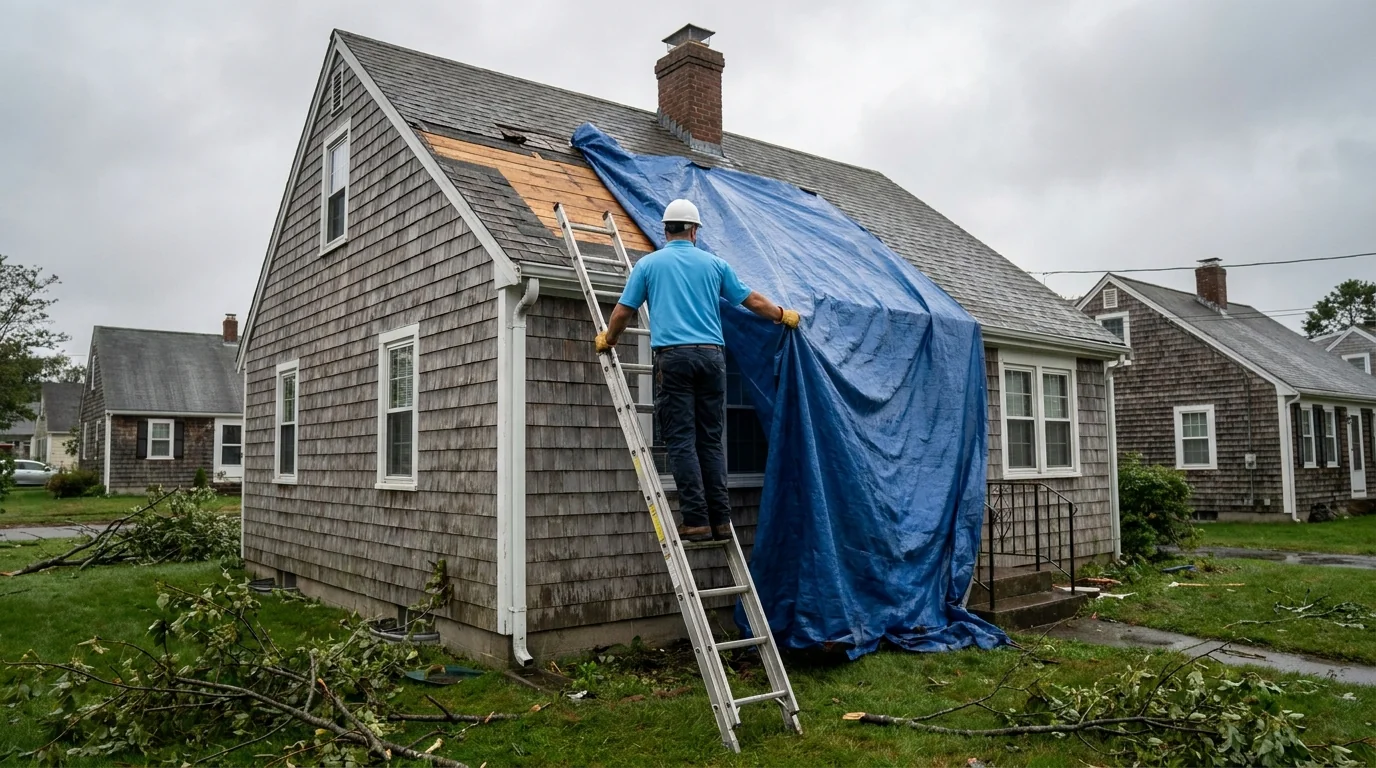
Emergency stabilization — boarding windows, tarping roof penetrations, and deploying temporary barriers to stop active water intrusion while permanent repairs are scoped.
Water extraction and moisture mapping — standing water is extracted with truck-mounted units, then thermal imaging and calibrated moisture meters map the full extent of saturation. In Maplewood’s older homes, plaster walls hold water longer than drywall and require extended drying cycles; we set drying targets based on actual material readings, not calendar days.
Structural drying and documentation — commercial desiccant dehumidifiers and high-velocity air movers run in a monitored drying system. Daily readings are logged and shared with your insurance adjuster as the job progresses.
Debris removal and reconstruction scoping — fallen tree material, damaged roofing, and compromised structural members are removed and documented. Our team is licensed as an NJ Home Improvement Contractor through the NJ Division of Consumer Affairs, so we can carry the project from emergency mitigation through finished reconstruction under one roof.
As an IICRC Certified Firm (#210213), our drying protocols follow the S500 and S110 standards — documentation that insurers recognize and adjusters expect.
Reaching Maplewood from Kenilworth
Our crews are based in Kenilworth, which puts Maplewood roughly 20–25 minutes out via Route 22 East to Springfield Avenue or via I-78 East to the Garden State Parkway. We operate 24 hours a day, seven days a week, so a storm that makes landfall at 2 a.m. on a Wednesday gets the same response as a Saturday afternoon event. When a major storm affects the whole region simultaneously, we triage by severity and communicate estimated arrival windows honestly — we will not promise a time we cannot keep.
Maplewood Insurance Coordination
Storm claims in Maplewood tend to involve multiple damage categories at once — wind-driven roof damage, flood-related basement losses, and fallen-tree structural damage may all appear on the same property. We photograph and document each damage category separately, which matters because homeowners’ policies, flood policies (NFIP or private), and tree-damage riders are often handled by different adjusters or even different carriers. We work directly with your insurance representative, provide itemized scope-of-loss reports, and can meet adjusters on-site to walk the damage.
Local Note
In Maplewood’s older Tudors and colonials — particularly those on the hillside blocks above Maplewood Village and in the Tuscan neighborhood — original plaster walls absorb storm-driven water more slowly than modern drywall, but they release it more slowly too. A wall that reads dry on a pin-type meter at day three may still carry significant moisture in the underlying lath and framing. We use non-invasive radio-frequency moisture meters alongside standard pin meters on these properties and extend drying validation periods accordingly. Pulling a job too early in a 1920s colonial is one of the most common reasons mold shows up three weeks after a storm — we have seen it enough times in this area to build the extra verification step into every scope.
If a storm has hit your property in Maplewood, call (855) 650-7422 now. Whether it is a tree through a roof in the Hilton neighborhood or a flooded basement two blocks from the Maplewood Train Station, we are available around the clock and can dispatch a crew to assess the damage and begin stabilization.
Serving Maplewood from our Fair Lawn headquarters — ★ 4.8 · 158 Google reviews
“Very professional staff and also helped accommodate working around some other contractors that were simultaneously working in my house. Highly recommend!” — Gautam, July 2026Read our reviews on Google →
Storm Damage Restoration in Maplewood: Service Coverage
Frequently Asked Questions
How fast can you arrive for storm damage restoration in Maplewood?
How quickly can The Restoration Group reach a storm-damaged home in Maplewood's Hilton or Jefferson neighborhoods?
The East Branch of the Rahway River flooded our street near Memorial Park — is that considered a flood loss or a storm loss for insurance purposes?
Our 1920s Tudor in the Tuscan neighborhood has original plaster walls — does that change the drying timeline after storm water intrusion?
A large tree fell on our roof during a storm — what does the restoration process look like from emergency tarping through full repair?
Are homes near Maplewood Village and the train station especially vulnerable to storm damage, and why?
Storm Damage Restoration response in Maplewood
Most Maplewood calls see a technician on-site within 60 minutes from our Fair Lawn headquarters.