Storm Damage Restoration in Livingston
24/7 storm damage restoration in Livingston, NJ. IICRC-certified, insurance billing accepted. Call (855) 650-7422.
Our IICRC-certified technicians are dispatched from our Fair Lawn, NJ headquarters and are typically on-site in Livingston within 60 minutes of your call.
When a fast-moving nor’easter or a remnant tropical system stalls over Essex County, Livingston takes a particular kind of beating. The Canoe Brook watershed threads through the western side of town, and when rainfall tips past two inches an hour — as it did during Ida in 2021 — low-lying streets near the West Essex Trail can turn into drainage channels before a sump pump has time to cycle. Add the town’s dense canopy of mature oaks and silver maples, and a single severe storm can mean downed limbs through rooflines, flooded finished basements, and saturated wall cavities all on the same block.
Why Livingston Properties Are Especially Vulnerable After Storms
Livingston’s housing stock tells the story of three different eras, and each era carries its own storm-damage risk profile. The 1950s–70s split-levels and colonials that fill neighborhoods like Northland and Collins were built before modern drainage codes required positive grading away from foundations. Their window wells and below-grade utility penetrations become entry points the moment a storm drops more water than the soil can absorb. Older cast-iron drain lines in these homes are often partially occluded with decades of buildup; a surge of debris-laden runoff can back them up completely.
On the other end of the spectrum, the newer teardown McMansions on Cedar Hill Road and surrounding streets were built with expansive finished basements — home theaters, gyms, in-law suites — that dramatically raise the cost and complexity of any flood event. Luxury flooring, custom millwork, and built-in cabinetry don’t dry the same way a bare concrete utility room does. A storm that would have been a minor inconvenience in an older unfinished basement becomes a five-figure loss in a finished lower level.
Tree damage compounds all of it. Livingston’s mature tree canopy is one of the town’s defining features, but silver maples in particular are notorious for shallow root systems and brittle branch structure. A 60 mph wind gust — well within range for a strong thunderstorm line — can drop a limb large enough to breach a roof deck, and once the roof envelope is open, rain intrusion begins within minutes.
Our Storm Damage Restoration Process in Livingston
The first priority after any storm loss is stopping new damage from accumulating. When we arrive, we assess the full scope before touching anything: roof integrity, structural loading from saturated materials, and whether standing water has reached electrical panels or HVAC equipment. Livingston’s split-level floor plans mean water entering at grade can travel laterally into finished spaces on multiple levels — we trace the moisture path with thermal imaging and pin-type meters rather than assuming the damage stops where it’s visible.
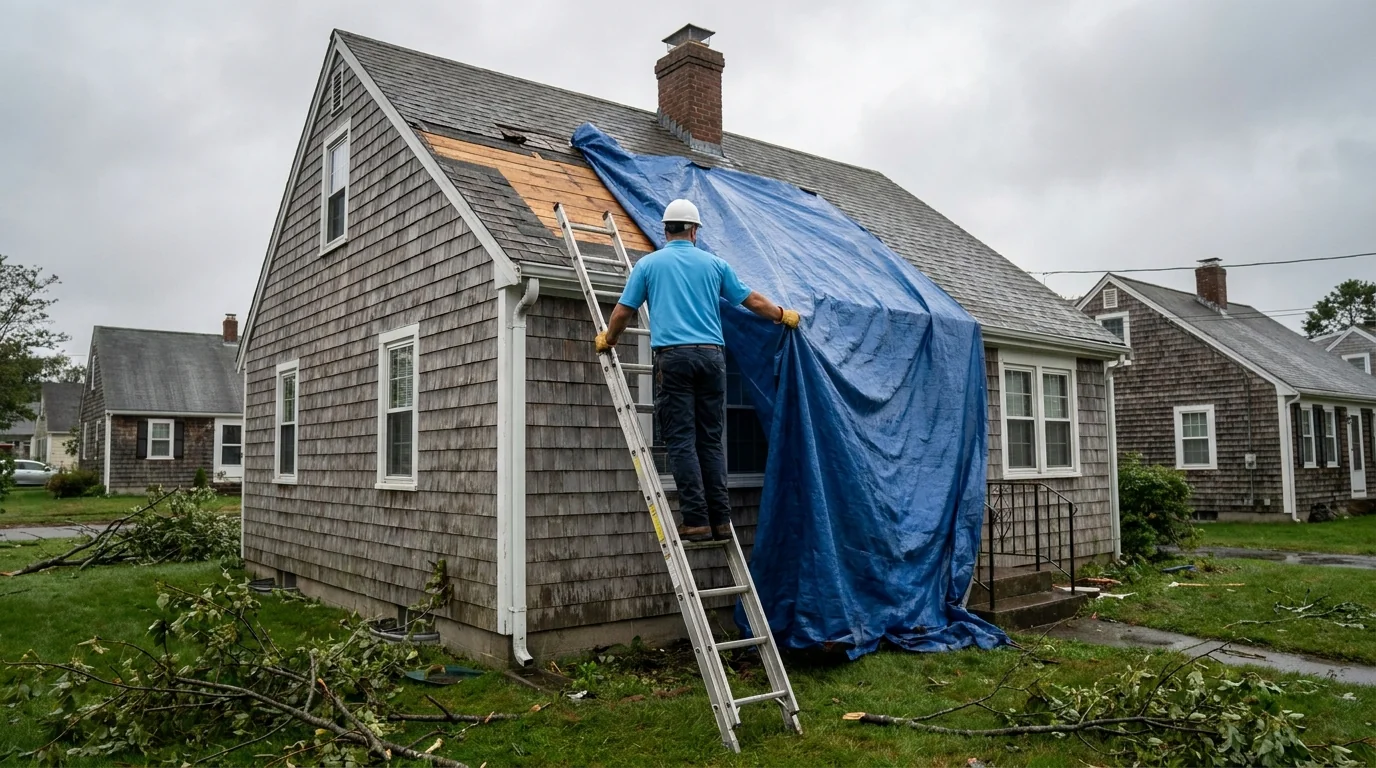
Once the assessment is complete, we move to emergency stabilization — board-up and roof tarping for any breach in the building envelope, followed by water extraction using truck-mounted units capable of handling the volume that a finished basement flood generates. Structural drying follows the IICRC S500 standard, with desiccant or refrigerant dehumidifiers and high-velocity air movers placed according to a calculated drying plan, not guesswork. We monitor moisture readings daily and adjust equipment until materials reach documented drying goals.
Debris removal — downed limbs, damaged roofing, destroyed insulation — runs parallel to the drying phase. We coordinate with Essex County waste disposal requirements for storm debris and can manage the full chain from initial tarping through structural repairs and final cleaning.
Reaching Livingston from Kenilworth
The Restoration Group operates out of Kenilworth, roughly 12 miles from central Livingston via Route 22 West to I-78 West or through Springfield on Route 24. Because we run 24/7, a call at 2 a.m. after a storm moves through gets the same response as a call at noon. Riker Hill and Squiretown sit on the eastern and northern edges of town respectively — slightly longer drives than the core, but well within our standard service area. If you’re near the Livingston Mall corridor or the Saint Barnabas Medical Center campus and a commercial property has sustained storm damage, we handle commercial losses including sprinkler-discharge events alongside residential work.
Local Note: What Livingston Crews Know About Post-Storm Moisture
One thing that catches out-of-area contractors in Livingston is the interaction between the town’s clay-heavy soil and finished basement construction. After a major storm event, the ground stays saturated for days — sometimes more than a week in the low areas near the Canoe Brook. That sustained soil saturation keeps hydrostatic pressure against foundation walls long after the storm has passed, which means water can continue seeping into a basement even after extraction is complete. We account for this in our drying timelines: jobs in flood-prone sections of 07039 typically require extended monitoring and sometimes a second round of equipment adjustment three to four days after initial setup, once the soil begins to release its load.
If you’ve had storm damage and you’re in Livingston — whether it’s a roof breach in Northland, a flooded finished basement near Cedar Hill, or a downed tree through a garage — call (855) 650-7422 any time. We’ll walk you through next steps before we even arrive on-site.
Serving Livingston from our Fair Lawn headquarters — ★ 4.8 · 158 Google reviews
“Great customer service. I was kept well informed throughout the entire process. I received nothing but respect and sympathy from everyone I dealt with.” — Ryan, July 2026Read our reviews on Google →
Storm Damage Restoration in Livingston: Service Coverage
Frequently Asked Questions
How fast can you arrive for storm damage restoration in Livingston?
How quickly can The Restoration Group reach a Livingston address after a storm?
Are homes in the Northland and Collins neighborhoods more likely to have basement flooding after a storm?
Ida hit Livingston hard in 2021 — if we get another storm like that, what should I do first while waiting for your crew?
How does Livingston's clay soil affect the drying timeline after a storm flood?
Does storm damage to a finished basement in Livingston typically get covered by homeowners insurance, and how do you help with the claim?
Storm Damage Restoration response in Livingston
Most Livingston calls see a technician on-site within 60 minutes from our Fair Lawn headquarters.