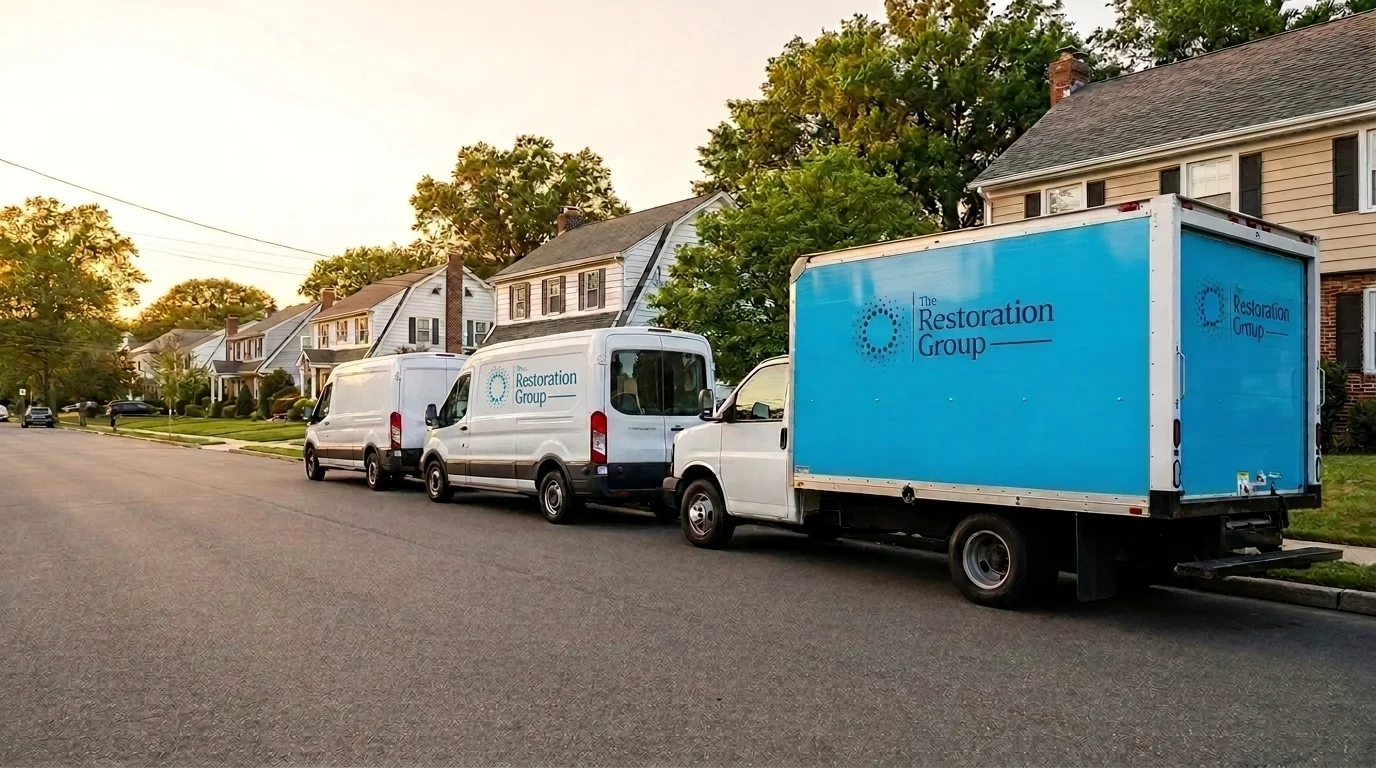
Water Cleanup in Brooklyn
24/7 water cleanup in Brooklyn, NY. IICRC-certified, insurance billing accepted. Call (855) 650-7422.
Our IICRC-certified technicians are dispatched from our Fair Lawn, NJ headquarters and are typically on-site in Brooklyn within 60 minutes of your call.
Brooklyn’s brownstone belt and coastal edges create water damage conditions that few other urban markets match. When a sewer backs up into a garden-level apartment in Park Slope, or a nor’easter pushes water under the cellar door of a Brooklyn Heights rowhouse, the clock starts immediately — mold can begin colonizing saturated plaster and wood lath within 24 to 48 hours. The Restoration Group responds 24/7, dispatching IICRC Certified Firm crews (Firm #210213) to address standing water, soaked structural materials, and the secondary damage that follows if extraction is delayed.
Why Brooklyn Properties See Water Cleanup Issues
The borough’s housing stock tells the story. The brownstone belt running through Park Slope, Brooklyn Heights, and the Bed-Stuy fringe is largely 1880s–1920s masonry construction — garden-level and cellar units that sit at or below grade, with foundation walls that were never designed for modern waterproofing standards. When heavy rain overwhelms the combined sewer system, water doesn’t just seep in; it finds every crack in a 100-year-old mortar joint and every gap around a cast-iron drain stack.
Coastal neighborhoods carry a different kind of exposure. Canarsie and the areas surrounding Coney Island sit in low-lying zones with real storm-surge history — Sandy made that permanent in the borough’s memory. Even moderate coastal storms can push water inland faster than floor drains can handle it. In those neighborhoods, standing water cleanup isn’t a rare event; it’s a recurring seasonal concern that building owners plan for.
Brooklyn’s street-level infrastructure compounds the risk. Aging combined sewer lines — which carry both stormwater and sewage in a single pipe — can surcharge during heavy rain events, forcing contaminated water back up through floor drains and toilets. That changes the cleanup category entirely, requiring not just extraction but proper disinfection and documentation of the contamination level for insurers.
Our Water Cleanup Process in Brooklyn
Every job starts with moisture mapping. In a Brooklyn rowhouse, surface readings can be misleading — plaster over wood lath may feel firm underfoot while the lath behind it holds significant moisture. Thermal imaging and calibrated moisture meters let crews identify the true wet boundary before any drywall or plaster decisions are made, which matters enormously in buildings where original millwork and tin ceilings are worth preserving.
Extraction comes next: truck-mounted and portable units sized to the space, because a narrow Brooklyn cellar with a low ceiling requires different equipment staging than an open commercial floor. Once standing water is removed, the drying phase begins with industrial air movers and desiccant or refrigerant dehumidifiers placed to create directional airflow through wall cavities and under flooring. Moisture readings are logged daily so the drying record is documentable — a requirement most Brooklyn co-op boards and commercial property insurers will ask for before closing a claim.
For losses involving sewage backup or floodwater from the street, affected porous materials are removed, the space is treated with EPA-registered disinfectants, and the area is cleared before reconstruction begins.
Reaching Brooklyn from Kenilworth
The Restoration Group’s operations hub in Kenilworth, NJ puts crews within reach of Brooklyn via the Goethals Bridge to the Staten Island Expressway and across the Verrazzano-Narrows Bridge — a direct corridor into Bay Ridge and the rest of Brooklyn’s ZIP codes. For jobs in Williamsburg (11211) or the northern end of the borough, the Holland Tunnel and BQE provide the alternate route. Because the team operates 24/7, dispatch can move at any hour without the delays that come with business-hours-only scheduling.
Parking and access logistics matter in Brooklyn in ways they don’t in suburban markets. Narrow streets, alternate-side rules, and building service entrances that face rear alleys all affect how quickly a crew can stage equipment. Crews coordinate access details before arrival on jobs in dense blocks — a step that saves time on-site and avoids the friction that slows down emergency response in tight urban conditions.
Brooklyn Insurance and Co-op Board Coordination
Brooklyn’s ownership landscape is layered. A brownstone owner in Flatbush deals directly with their carrier. A co-op shareholder in Brooklyn Heights answers to a board with its own master policy and its own requirements for what documentation a contractor must produce before work begins. A commercial landlord near the Barclays Center may have a property manager, a carrier, and a tenant’s carrier all involved in the same loss.
The Restoration Group documents losses with photo evidence, moisture logs, and scope-of-work reports formatted for carrier review. That paperwork trail is what gets a claim approved and a job closed without disputes over what was wet, what was removed, and why.
Local Note
In Brooklyn’s older masonry rowhouses, party walls — the shared structural walls between attached buildings — are a specific complication during water cleanup that doesn’t come up the same way in detached suburban construction. If a water loss saturates a party wall, the moisture doesn’t stop at the property line. A neighbor’s interior finishes can begin showing damage days after the source unit has been dried. Crews working in attached rowhouse blocks document party-wall moisture readings as part of the initial assessment, both to protect the neighbor and to give the affected owner a clear record that the loss was contained to their side — something a co-op board or insurer may specifically ask about.
If your Brooklyn property is dealing with standing water, soaked flooring, or a backup that reached finished spaces, call (855) 650-7422. The Restoration Group is available around the clock, and the documentation your insurer or building management company needs starts the moment the crew arrives on site.
Water Cleanup in Brooklyn: Service Coverage
Frequently Asked Questions
How fast can you arrive for water cleanup in Brooklyn?
How quickly can The Restoration Group reach a water emergency in Park Slope or Brooklyn Heights?
Brooklyn co-op boards often require contractor documentation before approving work — what do you provide?
My Canarsie basement flooded during a storm — is that treated differently than a burst pipe?
What happens to original plaster walls and wood lath in a Brooklyn rowhouse during the drying process?
Does a sewer backup in a Brooklyn apartment require different equipment than a standard water extraction job?
Will my homeowners insurance cover water cleanup in Brooklyn?
Water Cleanup response in Brooklyn
Most Brooklyn calls see a technician on-site within 60 minutes from our Fair Lawn headquarters.