Water Cleanup in Bloomfield
24/7 water cleanup in Bloomfield, NJ. IICRC-certified, insurance billing accepted. Call (855) 650-7422.
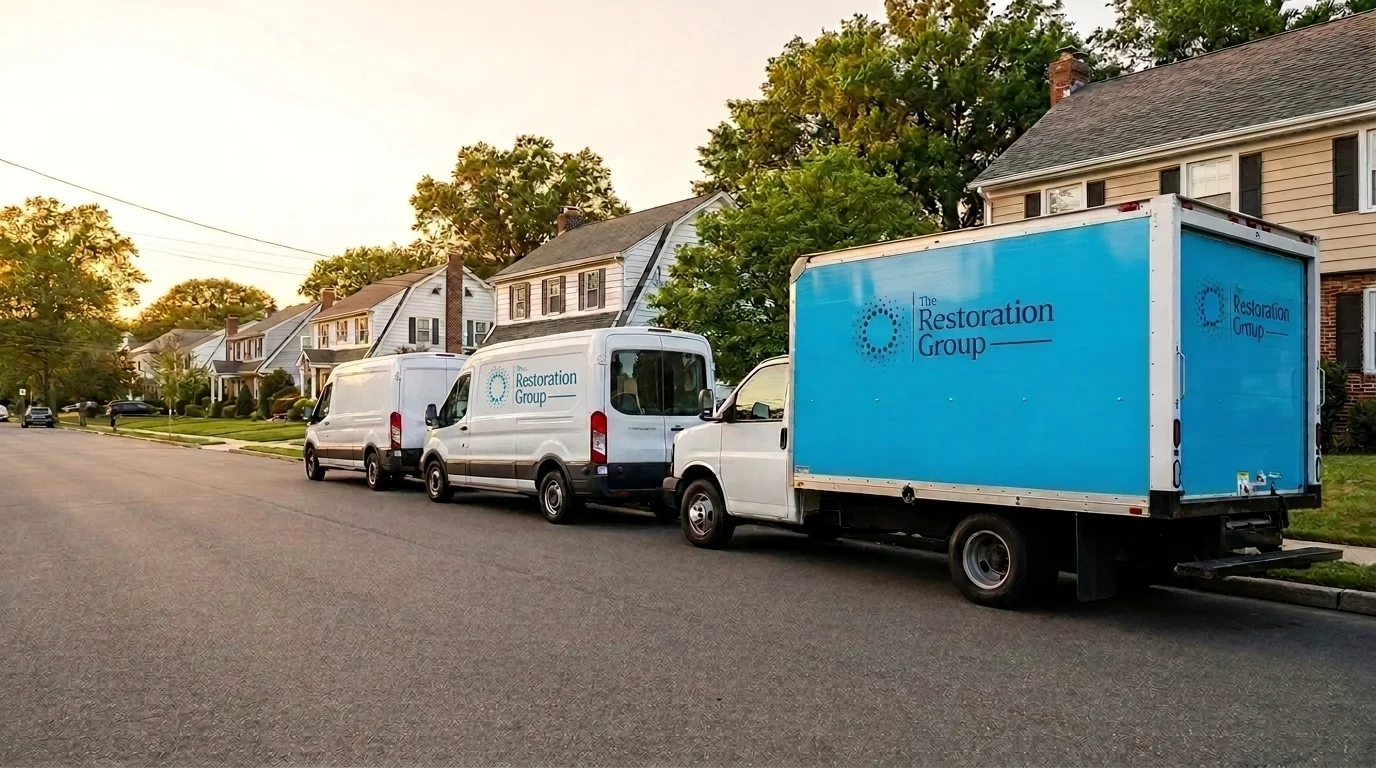
Our IICRC-certified technicians are dispatched from our Fair Lawn, NJ headquarters and are typically on-site in Bloomfield within 60 minutes of your call.
When the Third River backs up during a summer downpour or a century-old galvanized supply line finally lets go in a Watsessing two-family, the water doesn’t wait for business hours. Bloomfield’s dense mix of 1920s colonials, Tudors, and postwar capes — most with finished basements sitting below grade — means a burst pipe or sump failure can turn a utility room into a foot of standing water before a homeowner realizes what’s happening. The Restoration Group responds 24/7 to water cleanup calls across Bloomfield (07003), working to stop the spread before saturation reaches framing, subfloor, and the drywall your family lives behind.
Why Bloomfield Properties See Water Cleanup Issues
Bloomfield’s housing stock is part of what makes it a beautiful, walkable Essex County town — and part of what makes water losses here more complicated than in newer suburbs. Homes built between 1900 and 1940 were plumbed with galvanized steel supply lines that corrode from the inside out. By the time a pinhole leak becomes a visible stain, the pipe wall may already be paper-thin. Cast-iron waste lines in the same vintage homes develop root intrusion and joint failures that send sewage backward into basement drains during heavy rain events.
The geography compounds the risk. The Second River and Third River (Yantacaw Brook) thread through the Watsessing and Brookdale neighborhoods, and both corridors experienced significant basement flooding and sewer surcharging during Hurricane Ida in 2021. That event reminded many residents that sump pumps are not optional equipment — and that a failed float switch during an overnight storm can mean waking up to several inches of standing water. Along the Broad Street and Bloomfield Avenue corridors, commercial properties and the blocks surrounding Bloomfield College face their own pattern: roof membrane failures and HVAC condensate overflows that migrate into tenant spaces after hours.
Our Water Cleanup Process in Bloomfield
Water cleanup in an older Bloomfield home follows a different rhythm than work in a newer construction suburb. The first step on arrival is containment and source control — shutting off supply, confirming the sewer isn’t still actively backing up, and identifying whether the water is clean supply, gray, or category 3 sewage. That distinction matters immediately because it changes how materials are handled and what PPE the crew wears.
Extraction comes next. In finished Bloomfield basements, that typically means truck-mounted or portable extraction units pulling standing water from carpet, engineered flooring, or tile, followed by targeted extraction along wall bases where water wicks upward into framing cavities. Moisture mapping with thermal imaging and calibrated meters follows — because in plaster-and-lath construction common to Brookdale Park-area colonials and North Center Tudors, a wall can read surface-dry while the lath behind it holds significant moisture. Drying equipment — desiccant or refrigerant dehumidifiers, air movers positioned to create directed airflow — is then placed according to a drying plan documented to IICRC S500 standards. Monitoring readings are logged on each visit until structural materials reach acceptable equilibrium.
Reaching Bloomfield from Kenilworth
The Restoration Group is based in Kenilworth, which puts Bloomfield roughly 20 to 25 minutes away via Route 22 East to Garden State Parkway North, or via Springfield Avenue through Union and Maplewood depending on traffic conditions. Because we operate 24/7, late-night calls from Bloomfield Center or the Brookside area typically face lighter traffic and faster travel than a midday dispatch. When crews are already staged in Essex County from an earlier call, response can be quicker still. If you’re calling from the Watsessing section near the park — an area we know sees sump and sewer calls regularly — give our dispatcher your cross street so we can route the closest available crew.
Local Note
One thing that catches homeowners off guard in Bloomfield’s older two-family and colonial stock: plaster walls absorb water more slowly than modern drywall, which can make a wall look fine for the first 24 to 48 hours after a loss. The problem is that plaster also releases that moisture slowly during drying — and the wood lath behind it can stay elevated in moisture content long after the surface feels dry to the touch. In Brookdale and Watsessing homes especially, where original plaster is common, we extend drying timelines and take deeper readings before calling a structure dry. Pulling equipment too early is one of the most common reasons a water loss becomes a mold remediation job three weeks later.
If standing water is in your basement right now, or you’re looking at a ceiling stain that’s still spreading, call (855) 650-7422. We’ll walk you through what to do before the crew arrives and get a team moving toward your Bloomfield address.
Water Cleanup in Bloomfield: Service Coverage
Frequently Asked Questions
How fast can you arrive for water cleanup in Bloomfield?
How quickly can you reach the Watsessing or Brookdale areas of Bloomfield for a water emergency?
Are Bloomfield's older two-family and colonial homes harder to dry out after a water loss?
My Bloomfield basement flooded from a sewer backup — is that handled differently than a burst pipe?
How does water cleanup work for a commercial property on Bloomfield's Broad Street corridor?
What should I do while waiting for the crew to arrive at my Bloomfield home?
Will my homeowners insurance cover water cleanup in Bloomfield?
Water Cleanup response in Bloomfield
Most Bloomfield calls see a technician on-site within 60 minutes from our Fair Lawn headquarters.