Water Leak Detection in Kenilworth
24/7 water leak detection in Kenilworth and surrounding areas. IICRC-certified, insurance billing accepted. Call (855) 650-7422.
A water bill that jumped without explanation. A musty smell near the baseboards. A warm spot on the slab in winter. These are the quiet signs of a hidden leak, and by the time they’re noticeable, water may have already been working its way through drywall, subfloor, or soil under the foundation for weeks. Water leak detection finds the source before it becomes a structural or mold problem, using equipment that reads moisture and temperature differences without tearing open walls on a guess.
What water leak detection actually involves
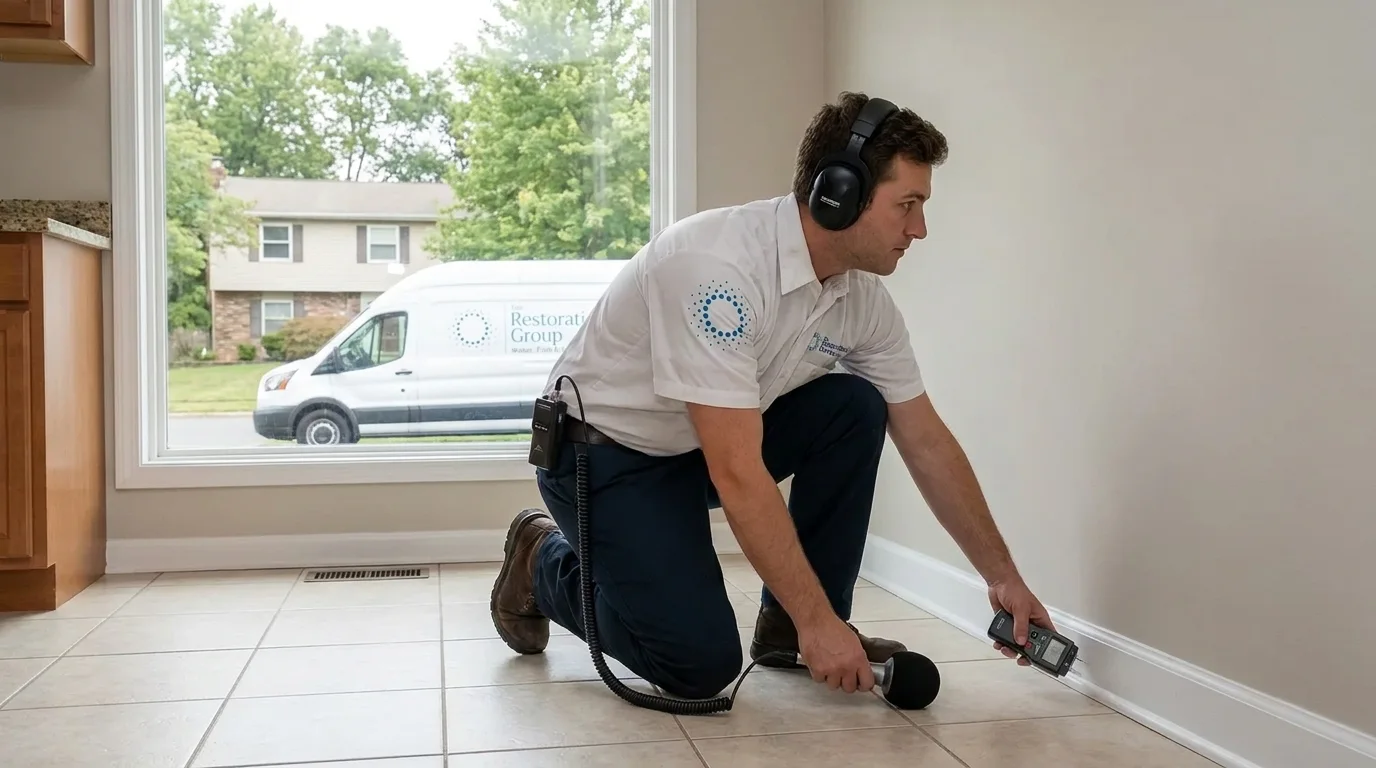
Finding a leak that isn’t visible means ruling out what it isn’t before confirming what it is. Technicians use thermal imaging cameras to spot temperature anomalies behind walls and under flooring, moisture meters to measure relative saturation in building materials, and acoustic listening devices that pick up the sound of pressurized water moving through pipe under slab or behind tile. For suspected slab leaks, pressure testing on the plumbing line isolates whether the leak is on the supply side or the drain side, which changes the entire repair approach. Most non-invasive detection work can be completed in a single visit, with findings documented in writing before anyone cuts into a wall.
This is diagnostic work, not demolition. The goal is to locate the leak precisely enough that any opening made to access it is small and targeted, rather than guessing and chasing the problem through multiple holes.
Our process
- Interview and visual inspection. We start with where the homeowner noticed the problem (a stain, a smell, a sound, a utility bill spike) and do a visual walkthrough of likely paths: plumbing chases, exterior grade, slab penetrations, water heater connections.
- Moisture mapping. A moisture meter establishes a baseline reading across the suspect area, identifying the boundaries of wet material even when the surface looks dry.
- Thermal imaging and acoustic detection. Infrared cameras flag temperature differences consistent with moisture migration, and acoustic sensors isolate the sound signature of water under pressure, which narrows the search to a specific section of wall, floor, or slab.
- Pressure isolation testing (for suspected slab or in-wall supply leaks). Isolating sections of the plumbing system under pressure confirms whether the leak is active and pinpoints which line is affected.
- Written findings and access plan. We document the likely leak location, the extent of affected material, and recommend the smallest access point needed for repair or, if damage has already occurred, the scope for drying and reconstruction.
What separates a good leak detection response from a bad one
The most common mistake is skipping the moisture mapping step and going straight to thermal imaging, which produces false positives from sunlight, HVAC runs, or recently used plumbing fixtures that have nothing to do with the actual leak. A thermal image alone is a clue, not a diagnosis. Another frequent error is opening drywall in the wrong spot because the water traveled along a stud bay or down a top plate before it showed up on the surface, which means the visible stain and the actual leak source are often a foot or more apart.
Insurance adjusters look for documentation that the leak was sudden and accidental rather than the result of long-term neglect, since that distinction often determines coverage. A dated moisture map, thermal images with timestamps, and a clear description of how the leak was isolated all support a stronger claim. Adjusters also want to see that detection happened before demolition, not after, because retroactive guessing about leak location is hard to substantiate.
What does water leak detection cost?
Costs vary based on how accessible the suspected leak is and whether it’s a surface-level fixture leak or a slab leak requiring pressure isolation. Every property and plumbing layout is different, which is why The Restoration Group provides a written scope and findings report before any repair or demolition work begins. Homeowners insurance typically covers the cost of locating a leak when it’s tied to a covered water damage claim, though coverage for detection alone, without resulting damage, varies by policy.
| Scenario | Typical range |
|---|---|
| Single fixture or visible-area leak, basic moisture scan | $200 - $450 |
| Thermal imaging inspection, whole-room | $300 - $600 |
| Slab leak detection with pressure isolation testing | $500 - $1,200 |
| Whole-house leak investigation, multiple suspect areas | $600 - $1,500 |
| Detection combined with emergency water extraction | $1,000 - $3,000+ |
Seasonal & regional considerations
Kenilworth’s older housing stock includes a mix of mid-century slab-on-grade homes and houses with copper supply lines original to construction, both of which are common sources of pinhole leaks and slab leaks as plumbing ages past its typical service life. Winter freeze-thaw cycles put additional stress on exterior-adjacent pipe runs, and a pipe that cracked during a cold snap may not show visible water damage until a thaw sends it moving again. Clay and silt soils common across Union County can also shift slightly with seasonal moisture changes, which puts strain on buried supply lines and can contribute to slab leaks over time.
Service area
We provide water leak detection for homeowners and property managers in Kenilworth and throughout the surrounding Union County area, including Cranford, Roselle Park, and Union Township.
If something doesn’t add up about your water usage, a damp spot that won’t dry, or a sound you can’t place, schedule a leak detection visit before it turns into a repair project. The Restoration Group is IICRC Certified Firm #210213, licensed as a Home Improvement Contractor in New Jersey, and available 24/7 to find the source before it finds you.
Frequently Asked Questions
Does homeowners insurance cover water leak detection?
How do you find a leak inside a wall without cutting it open?
What is a slab leak and how is it different to detect?
How long does a leak detection visit take?
What should I do while waiting for a leak detection appointment?
Looking for the best water leak detection company in Fair Lawn?
The Restoration Group provides water leak detection in Fair Lawn, NJ and the surrounding area, and has served local property owners since 2021. Customers rate us 4.8 out of 5 stars across 166 Google reviews. We answer calls 24/7 — call (844) 808-8838 for immediate help.
Need Water Leak Detection now?
We respond 24/7 across Fair Lawn and surrounding NJ cities.
Related Coverage
- Our Restoration Services
- Contact The Restoration Group
- Restoration Services in Avenel
- Restoration Services in Bayonne
- Restoration Services in Bloomfield
- Restoration Services in Bridgewater
- Restoration Services in Brooklyn
- Restoration Services in Carteret
- Restoration Services in Chatham
- Restoration Services in Clark
- Restoration Services in Clifton
- Restoration Services in Colonia
- Restoration Services in Cranford
- Restoration Services in East Brunswick