24/7 Emergency Biohazard Cleanup in Kenilworth
24/7 emergency biohazard cleanup in Kenilworth and surrounding areas. IICRC-certified, insurance billing accepted. Call (855) 650-7422.
Need biohazard or trauma cleanup in Kenilworth? We answer 24/7. Call now and our crew can be on-site within 60 minutes to handle the cleanup with discretion and care.
Some situations can’t wait for a callback, and they can’t be handled with household cleaners and good intentions. Blood, bodily fluids, and other infectious materials carry pathogen risks that aren’t visible to the eye and don’t disappear when a surface looks clean. Whether the cause is a traumatic accident, an unattended death, or a hoarding situation with biohazardous accumulation, the priority is the same: contain the risk, remove the material safely, and restore the space so the people who live or work there can return without worry.
What biohazard cleanup actually involves
Biohazard remediation is regulated work. In New Jersey, biohazardous waste, including blood, bodily fluids, sharps, and infectious material, must be collected, packaged, labeled, and transported by licensed handlers following state and federal guidelines. That means the job isn’t just cleaning; it’s documentation, chain-of-custody waste manifests, and proper disposal through a licensed medical waste facility.
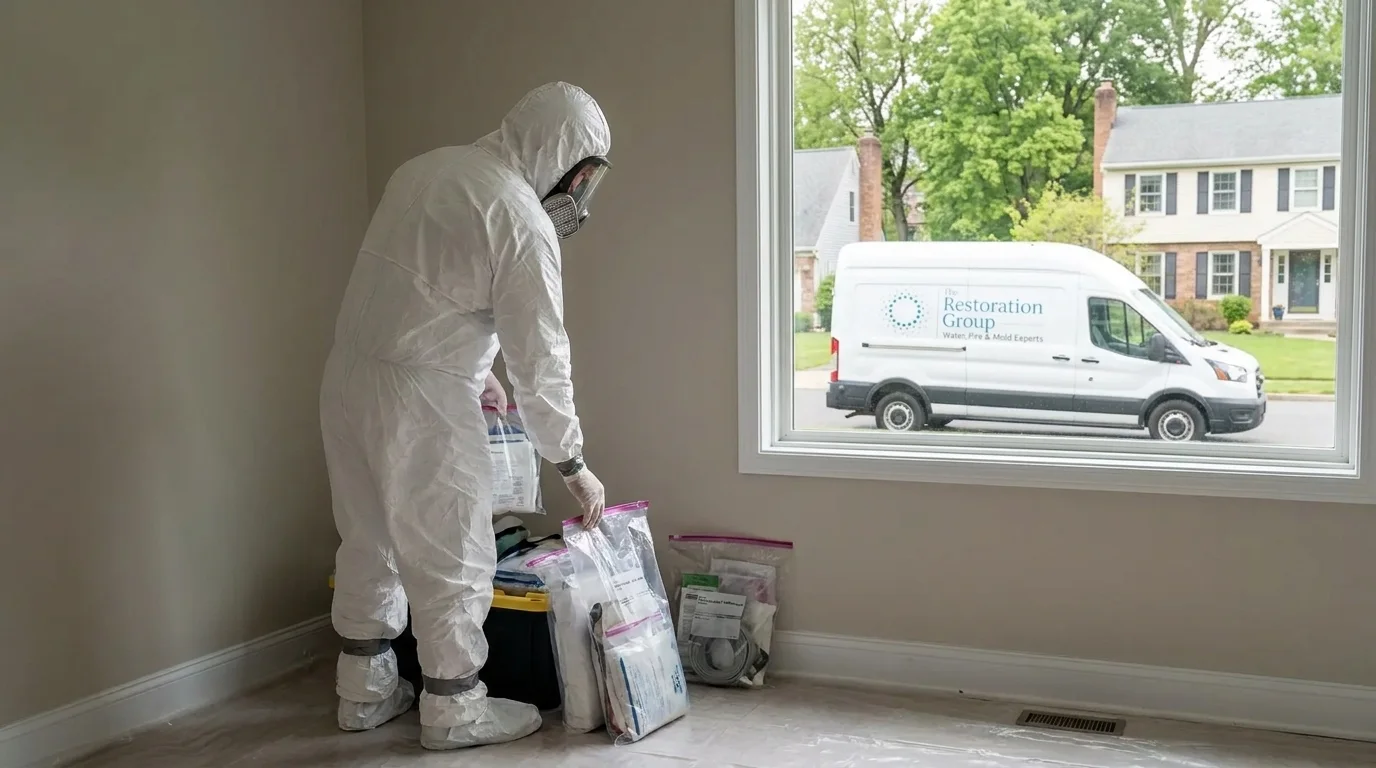
On-site, the work involves personal protective equipment staging before anyone enters the affected area, physical removal of contaminated materials (porous surfaces like carpet, drywall, and subflooring often cannot be salvaged), enzymatic and hospital-grade disinfectant treatment of structural surfaces, and ATP or other verification testing to confirm the area meets clearance standards before containment is removed. HEPA air filtration runs throughout to capture airborne particulates.
Timeline depends on the scope. A single-room incident with hard flooring typically resolves in one to two days. Situations involving porous building materials, multiple rooms, or extended time before discovery take longer, sometimes requiring partial reconstruction after remediation is complete.
The Restoration Group is an IICRC Certified Firm (#210213) and a licensed New Jersey Home Improvement Contractor. Crews are available around the clock.
Our process
-
Initial assessment and containment setup. Before any cleaning begins, the affected area is assessed for scope and pathogen risk. Physical barriers and negative air pressure are established where needed to prevent cross-contamination to unaffected spaces. Entry and exit protocols are set for the crew.
-
PPE staging and regulated material removal. Crew members suit up in appropriate personal protective equipment before entering. Contaminated porous materials, carpet, padding, drywall, insulation, are removed, double-bagged in regulated biohazard containers, and inventoried for the waste manifest. Sharps and needle cleanup follows a separate protocol using puncture-resistant containers.
-
Enzymatic treatment and hospital-grade disinfection. Hard and semi-porous surfaces are treated with enzymatic cleaners that break down organic material at the molecular level, followed by EPA-registered hospital-grade disinfectants. This step is applied in sequence, not simultaneously, enzymatic action must complete before disinfectant is introduced, a detail that less careful operators sometimes skip.
-
Verification testing and clearance. Before containment comes down, surfaces are tested to confirm pathogen levels are within safe thresholds. ATP bioluminescence testing is one common method. Results are documented and included in the job file.
-
Waste transport and manifest documentation. All biohazardous waste leaves the property in labeled, regulated containers with a completed waste manifest, a legal requirement for transport and disposal. A copy goes to the property owner and, when applicable, to the insurance carrier.
What separates a good biohazard response from a bad one
The most common failure point in biohazard cleanup is incomplete removal of porous materials. A surface can appear clean and still harbor pathogens in the substrate beneath it. Carpet padding, wood subfloor, and drywall paper facing are particularly prone to this. Operators who stop at surface cleaning, rather than removing and replacing compromised materials, leave a hidden risk behind.
A second failure is skipping verification testing. Without ATP or equivalent testing, there is no documented evidence that the space is safe. Insurance adjusters increasingly require clearance documentation before closing a claim, and property owners have no objective confirmation without it.
Third: waste manifest gaps. Biohazardous waste transport without a complete, signed manifest is a regulatory violation. A reputable operator provides the property owner with a copy of the manifest as a matter of course, not only because it’s required, but because it’s the paper trail that protects everyone.
Discretion is also part of the job. Unmarked vehicles, plain-clothed crews, and direct communication with a single point of contact are standard practice for situations where privacy matters.
What does biohazard cleanup cost?
Typical costs for biohazard remediation vary significantly based on the type of material involved, the size of the affected area, and how long the situation went unaddressed before cleanup began. Most homeowners and property managers pay somewhere in the ranges below, these are industry-typical figures, not quotes from The Restoration Group.
| Scenario | Typical range |
|---|---|
| Small area, hard flooring, prompt response | $1,500 – $3,500 |
| Single room with porous materials (carpet, drywall) | $3,500 – $7,000 |
| Unattended death, extended time before discovery | $7,000 – $15,000+ |
| Sharps and needle cleanup, contained area | $500 – $2,000 |
| Multi-room or whole-property biohazard situation | $10,000 – $25,000+ |
Every loss is different, and The Restoration Group provides a written scope of work before any remediation begins. Homeowners insurance frequently covers biohazard cleanup, particularly in cases involving traumatic events, though coverage varies by policy and carrier; documentation of the loss and the remediation scope is essential to a successful claim.
Service area
The Restoration Group is based in Kenilworth, NJ, and provides biohazard cleanup throughout Union County and the surrounding region, including neighboring communities in Essex, Middlesex, and Morris counties. City-specific pages link back here for full service and process detail.
If you’re dealing with a situation that requires biohazard remediation, the next step doesn’t have to be complicated. Call (855) 650-7422 any time, day or night, to begin discreet biohazard cleanup with a crew that handles the logistics, the documentation, and the disposal so you don’t have to.
Services We Handle
- Biohazard & Trauma Cleanup
- Hoarding Cleanup
Frequently Asked Questions
Does homeowners insurance cover biohazard cleanup?
What licenses are required to transport biohazardous waste in New Jersey?
How do you handle privacy during a biohazard cleanup job?
What is ATP testing, and why does it matter for biohazard clearance?
Why do some biohazard cleanups require removing flooring or drywall?
Looking for the best biohazard cleanup company in Fair Lawn?
The Restoration Group provides biohazard cleanup in Fair Lawn, NJ and the surrounding area, and has served local property owners since 2021. Customers rate us 4.8 out of 5 stars across 166 Google reviews. We answer calls 24/7 — call (844) 808-8838 for immediate help.
Need Biohazard Cleanup now?
We respond 24/7 across Fair Lawn and surrounding NJ cities.
Related Coverage
- Our Restoration Services
- Contact The Restoration Group
- 24/7 Emergency Biohazard Cleanup in Bayonne
- 24/7 Emergency Biohazard Cleanup in Bloomfield
- 24/7 Emergency Biohazard Cleanup in Bridgewater
- 24/7 Emergency Biohazard Cleanup in Brooklyn
- 24/7 Emergency Biohazard Cleanup in Clark
- 24/7 Emergency Biohazard Cleanup in Clifton
- 24/7 Emergency Biohazard Cleanup in Cranford
- 24/7 Emergency Biohazard Cleanup in East Brunswick
- 24/7 Emergency Biohazard Cleanup in East Orange
- 24/7 Emergency Biohazard Cleanup in Edison
- 24/7 Emergency Biohazard Cleanup in Elizabeth
- 24/7 Emergency Biohazard Cleanup in Englewood