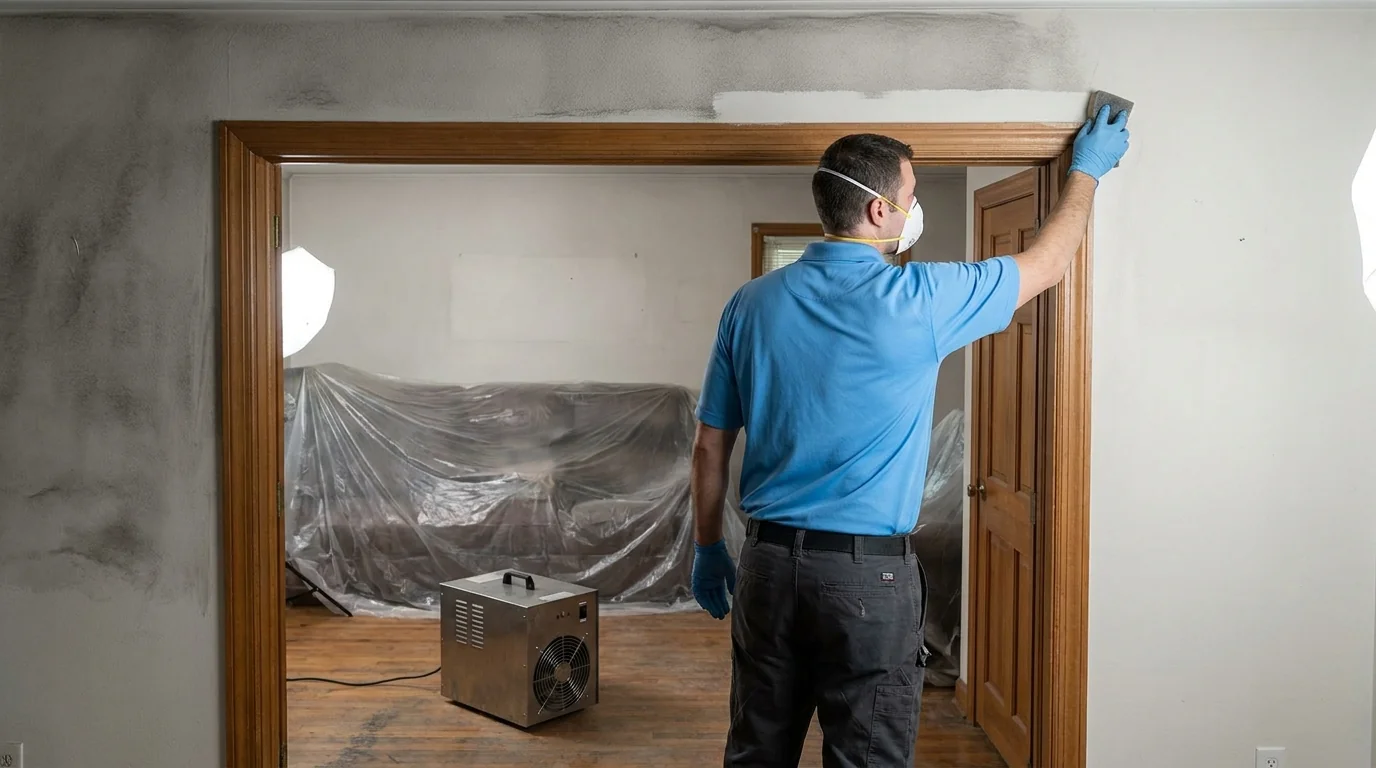
Smoke Damage Restoration in West Orange
24/7 smoke damage restoration in West Orange, NJ. IICRC-certified, insurance billing accepted. Call (855) 650-7422.
Our IICRC-certified technicians are dispatched from our Fair Lawn, NJ headquarters and are typically on-site in West Orange within 60 minutes of your call.
A kitchen fire in a Llewellyn Park Victorian or a furnace malfunction in a Pleasantdale split-level doesn’t just leave char — it leaves an invisible chemical residue that works its way into plaster, woodwork, HVAC ducts, and soft furnishings within hours. West Orange’s older housing stock, much of it built before 1960 with original horsehair plaster walls and narrow balloon-frame cavities, gives smoke somewhere to travel and hide that newer construction simply doesn’t. The sooner cleanup starts, the less of the home you lose to secondary damage.
Why West Orange Properties See Smoke Damage Differently
The ridge-and-valley topography that makes West Orange scenic also shapes how fires and smoke behave inside its homes. Drafts funneling off South Mountain Reservation and Eagle Rock Reservation can push smoke deeper into a structure during a fire event, and the prevailing westerly winds mean a neighbor’s fire can deposit soot on your siding and infiltrate your HVAC system before you’ve noticed anything burning.
The housing mix matters just as much as the geography. The grand Victorians and Queen Anne cottages in Llewellyn Park were built with plaster-and-lath walls, coffered ceilings, and detailed millwork — surfaces that absorb smoke odor and soot at a molecular level. Standard surface wiping won’t touch what’s embedded in those porous substrates. Postwar ranches and colonials in Pleasantdale and the St. Cloud neighborhood typically have finished basements with drop ceilings and carpet, which trap smoke particulates and hold odor long after the visible soot has been wiped away. Every structure type in 07052 requires a different decontamination approach.
Our Smoke Damage Restoration Process in West Orange
When we arrive, the first priority is a structured scope assessment — not a quick visual walk-through, but a systematic inspection that maps smoke migration through the HVAC system, wall cavities, and every finished space. Smoke follows air pressure, so rooms far from the fire origin often carry heavy odor loads that get missed without thermal imaging and air sampling.
From there, the work moves through a defined sequence:
- Dry smoke and wet smoke separation. High-heat fires produce dry, powdery soot that brushes off hard surfaces. Low-oxygen smoldering fires — common in upholstered furniture or electrical fires — leave a wet, oily residue that smears if treated the same way. We identify the smoke type before touching a surface.
- HEPA containment and negative air pressure. Containment barriers prevent cross-contamination to unaffected rooms while industrial HEPA air scrubbers run continuously.
- Surface decontamination. Walls, ceilings, and structural members are cleaned with chemistry matched to the soot type. For the plaster surfaces common in older West Orange homes, we use alkaline cleaners that lift embedded residue without saturating the substrate.
- Thermal fogging and hydroxyl treatment. Odor molecules bond to surfaces at a microscopic level. Thermal fogging replicates the penetration pattern of the original smoke, neutralizing odor at the source. Hydroxyl generators run afterward to address residual odor in porous materials.
- Duct cleaning and HVAC decontamination. Smoke that entered the air handler during the fire will recirculate indefinitely if the duct system isn’t addressed. We clean and treat the full duct run, not just the registers.
All drying and decontamination work is documented to IICRC Certified Firm standards (#210213), which matters when your insurance adjuster reviews the scope.
Reaching West Orange from Kenilworth
The Restoration Group operates 24/7 out of Kenilworth, NJ. The most direct routing to West Orange runs up Route 22 West to the Garden State Parkway North, then west on I-280 — a corridor that stays open even during off-hours. For addresses near Essex Green Shopping Center or along the Northfield Avenue commercial corridor, the I-280 exit at Pleasant Valley Way puts us close quickly. Llewellyn Park and the upper ridge neighborhoods are a short climb from there. We’re available around the clock because smoke damage doesn’t pause overnight — soot chemistry continues to etch and stain surfaces for every hour decontamination is delayed.
West Orange Insurance Coordination
Most residential fire and smoke losses in West Orange are covered under standard HO-3 homeowners policies, but the scope documentation has to be thorough for older homes where smoke has migrated into historic millwork, original hardwood floors, or plaster walls. Adjusters sometimes underestimate restoration costs on pre-1950 structures because replacement cost estimates are based on modern materials, not period-appropriate repairs.
We photograph and document every affected surface, pull moisture and air quality readings, and provide a line-item scope that reflects what the structure actually requires — not a generic estimate. We work directly with most major carriers and can communicate with your adjuster throughout the process so you’re not translating between contractor and insurance company.
Local Note
One thing that comes up repeatedly on West Orange jobs: the balloon-frame construction common in the older sections near Thomas Edison National Historical Park means wall cavities run uninterrupted from the basement sill plate to the roof rafters. When a fire event occurs on a lower floor, smoke travels vertically inside those cavities and deposits soot behind plaster on upper floors and in the attic — rooms that show no visible fire damage at all. Homeowners and even some contractors miss this entirely. On any West Orange job in a pre-1940 structure, we probe the attic and upper-floor wall cavities as a standard step, not an add-on.
If you’re dealing with smoke damage anywhere in West Orange — from a kitchen fire, an electrical event, or smoke infiltration from a neighboring property — call (855) 650-7422. We’ll assess the full scope of what the smoke has reached, not just what’s visible, and walk you through the restoration path from first call to final clearance.
Serving West Orange from our Fair Lawn headquarters — ★ 4.8 · 158 Google reviews
“The folks at TRG were professional, punctual, and pleasant to deal with. They did a great job addressing our issue and performed appropriate follow up to ensure our satisfaction.” — Jw, August 2026Read our reviews on Google →
Smoke Damage Restoration in West Orange: Service Coverage
Frequently Asked Questions
How fast can you arrive for smoke damage restoration in West Orange?
How quickly can The Restoration Group reach a smoke damage emergency in Llewellyn Park or Pleasantdale?
Does the age of West Orange's housing stock affect how smoke damage is cleaned?
Will my homeowners insurance cover smoke damage restoration in West Orange, and how does the claims process work?
What's the difference between dry smoke and wet smoke residue, and why does it matter for West Orange homes?
Can smoke from a neighboring property's fire affect a home in the 07052 ZIP code, and is that covered?
Smoke Damage Restoration response in West Orange
Most West Orange calls see a technician on-site within 60 minutes from our Fair Lawn headquarters.