Flood Damage Restoration in Teaneck
24/7 flood damage restoration in Teaneck, NJ. IICRC-certified, insurance billing accepted. Call (855) 650-7422.
Our IICRC-certified technicians are dispatched from our Fair Lawn, NJ headquarters and are typically on-site in Teaneck within 60 minutes of your call.
When Tropical Storm Ida pushed the Hackensack River over its banks in September 2021, basements across Teaneck filled faster than sump pumps could respond. Homes in the West Englewood and Whittier sections — many of them 1930s and 1940s brick colonials and Tudors built long before modern waterproofing standards existed — took on several feet of water within hours. That kind of event is not a one-off anomaly here; it is a preview of what Teaneck’s geography and aging infrastructure can produce any time a major storm stalls over Bergen County. When it happens again, the window to act is measured in hours, not days.
Why Teaneck Properties Are Especially Vulnerable to Flood Damage
Teaneck Creek winds through the township’s lower-lying corridors before draining toward the Hackensack River on the eastern edge of town. That drainage path runs directly beneath and alongside some of the densest residential blocks in the 07666 ZIP code. When both waterways crest simultaneously — as they did during Ida — stormwater has nowhere to go except into finished basements, crawl spaces, and ground-floor utility rooms.
The housing stock compounds the problem. The center-hall colonials and Tudor-style homes that define neighborhoods like The Grange and Bryant School area were constructed with cast-iron drain lines that are now 70 to 90 years old. Those pipes corrode, belly, and back up under surge conditions, meaning a flood event often delivers both clean stormwater intrusion and sanitary sewage simultaneously. That combination changes the remediation category — what starts as a Category 1 or 2 water loss can escalate to Category 3 contaminated water within 24 hours if sewage is involved, requiring full personal protective protocols and the disposal of porous materials that might otherwise be salvageable.
Commercial properties along the Cedar Lane district face a different but related risk: overnight sprinkler activations and utility failures in densely packed retail and restaurant spaces, where water migrates quickly across shared walls and subfloor assemblies into neighboring tenant spaces.
Our Flood Damage Restoration Process in Teaneck
Every job starts with a thorough moisture mapping inspection before any equipment is placed. In Teaneck’s older homes, that means probing beneath hardwood floors, behind plaster-and-lath walls, and inside the cavities of finished basement ceilings — areas where water travels invisibly and where a moisture reading on the surface tells only part of the story.
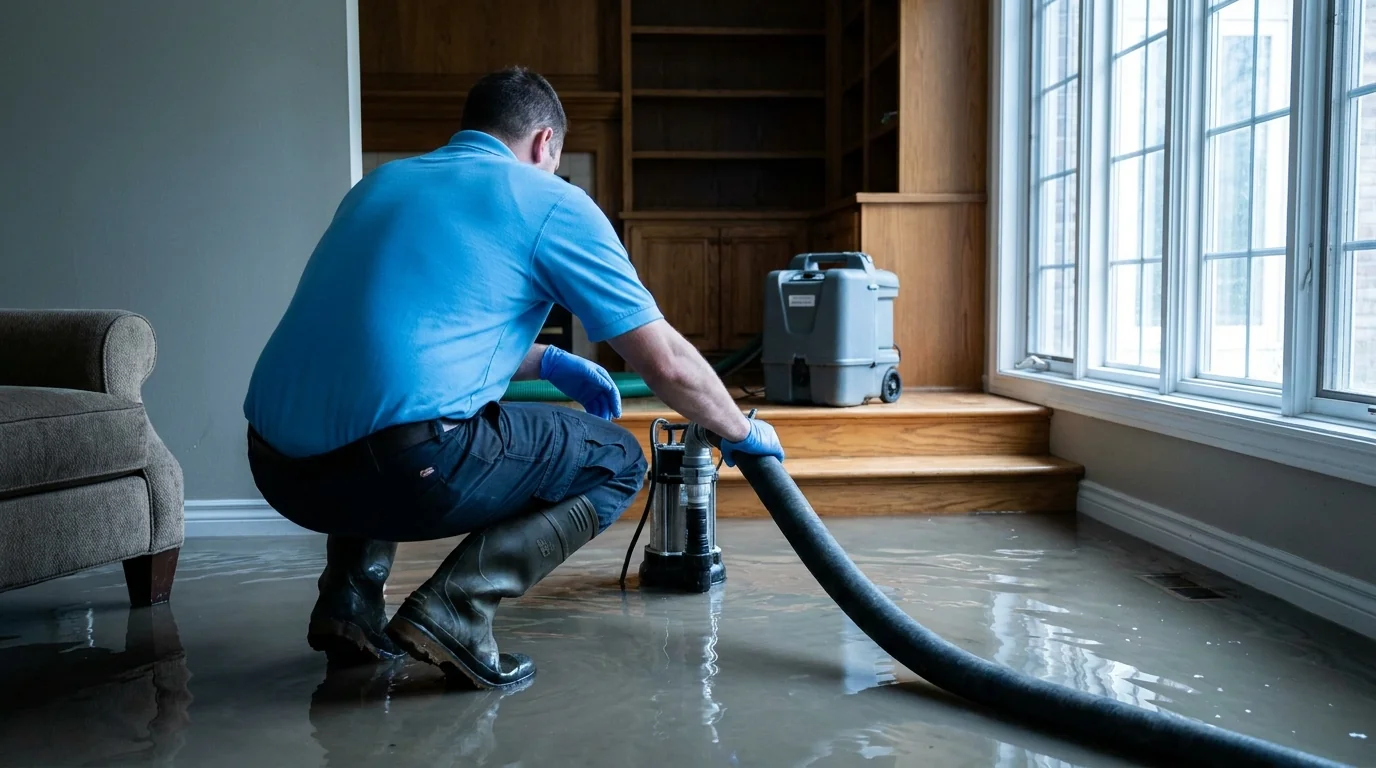
Once the full scope is documented, standing water is extracted using truck-mounted and portable extraction units. Structural drying follows using commercial-grade desiccant and refrigerant dehumidifiers, with high-velocity air movers positioned to move air through wall cavities, not just across open floor space. Drying progress is logged daily against the IICRC S500 standard, and affected materials are not signed off as dry until psychrometric readings confirm equilibrium — not just when they feel dry to the touch.
When sewage backup is confirmed, affected materials are handled under Category 3 protocols: antimicrobial treatment, controlled demolition of contaminated porous materials, and proper disposal before any reconstruction begins. We coordinate directly with your insurance adjuster throughout, providing photo documentation and moisture logs that support the claim file.
Getting to Teaneck from Kenilworth
The Restoration Group operates 24/7 out of Kenilworth, NJ, which puts Teaneck roughly 20 to 25 minutes away via Route 9W or the Garden State Parkway north to Route 4 under normal traffic conditions. For addresses in West Teaneck near the Cedar Lane district or the blocks adjacent to Votee Park, the Route 4 approach typically offers the most direct access. We dispatch around the clock, so a call at 2 a.m. after a basement floods during a nor’easter gets the same response as a weekday afternoon loss.
Local Note: What Teaneck’s Plaster Walls Mean for Drying Timelines
Many of the pre-war homes in Teaneck — particularly the larger colonials near Fairleigh Dickinson University and the brick Tudors throughout The Grange — were finished with three-coat plaster over wood lath rather than modern drywall. Plaster absorbs water more slowly than drywall, which can create a false sense of security in the first 24 hours when surface readings look relatively low. The problem is that plaster also releases that moisture slowly, and the wood lath behind it can hold elevated moisture content for days after the plaster face reads dry. On these jobs, we extend the drying validation period and use deeper-probe readings before signing off — a step that prevents callbacks weeks later when the lath finally dries out and the plaster cracks or the finish paint bubbles.
If your home in Teaneck has taken on water — whether from a backed-up drain during a storm, a failed sump pump, or direct flooding from Teaneck Creek — call The Restoration Group at (855) 650-7422. We will assess the damage, explain the scope honestly, and get drying equipment in place before secondary damage compounds the loss.
Serving Teaneck from our Fair Lawn headquarters — ★ 4.8 · 158 Google reviews
“Great customer service. I was kept well informed throughout the entire process. I received nothing but respect and sympathy from everyone I dealt with.” — Ryan, July 2026Read our reviews on Google →
Flood Damage Restoration in Teaneck: Service Coverage
Frequently Asked Questions
How fast can you arrive for flood damage restoration in Teaneck?
How quickly can The Restoration Group reach a flooded basement in West Englewood or Whittier?
Teaneck's older homes often have finished basements — does that affect how flood cleanup is handled?
If my basement flood in the 07666 ZIP code involved sewage backup, is the cleanup process different?
How does Teaneck Creek flooding differ from a typical burst-pipe water loss in terms of what gets damaged?
Will my homeowner's insurance cover flood damage restoration in Teaneck, and do you help with the claim?
Flood Damage Restoration response in Teaneck
Most Teaneck calls see a technician on-site within 60 minutes from our Fair Lawn headquarters.