Odor Removal and Deodorization in New Brunswick
24/7 odor removal and deodorization in New Brunswick, NJ. IICRC-certified, insurance billing accepted. Call (855) 650-7422.
Our IICRC-certified technicians are dispatched from our Fair Lawn, NJ headquarters and are typically on-site in New Brunswick within 60 minutes of your call.
New Brunswick’s dense mix of century-old rowhouses near Rutgers University, flood-prone riverfront blocks along the Raritan, and busy commercial corridors on George Street creates a city where odors don’t just linger — they embed themselves into plaster, brick, and aged wood in ways that a spray bottle and a fan will never reach. Whether you’re dealing with smoke residue from a kitchen fire in a Fifth Ward rental, a sewage backflow smell that’s soaked into the subfloor of a Robeson Village apartment, or a musty post-flood odor that crept in after Ida pushed water into low-lying riverfront units, professional deodorization is the only path to air that actually smells clean again.
Why New Brunswick Properties Hold Odors Longer
The building stock here works against quick fixes. Much of the residential housing in the 08901 ZIP code — particularly the multifamily rowhouses near Rutgers Village and the older two- and three-family homes closer to the Highland Park border — was built before 1950. Those structures rely heavily on plaster-and-lath walls, old-growth wood framing, and cast-iron drain stacks. Plaster is porous in a way that modern drywall isn’t: smoke particles, sewer gases, and mold-related VOCs penetrate the surface layer and get trapped in the substrate. A single cigarette fire or a slow drain leak can leave a smell that survives three rounds of surface cleaning.
The Raritan River’s flood history compounds this. When stormwater or river water enters a basement — as it did in a number of riverfront and low-lying addresses during Tropical Storm Ida in 2021 — it carries organic material that feeds odor-producing bacteria long after the standing water is gone. That biological odor source requires treatment, not just masking.
High-density student rentals add another layer. Rapid tenant turnover, deferred maintenance, and the occasional unreported water event mean odor problems are often discovered weeks after they started — by which point microbial activity has had time to colonize porous materials throughout the unit.
Our Deodorization Process, Calibrated to New Brunswick
Effective odor removal follows a sequence — and skipping steps is why DIY attempts fail. The process starts with source identification. No deodorization technology works on an odor source that’s still active. We locate and remove or remediate the origin first: charred material, contaminated flooring, saturated insulation, or a drain line issue.
Once the source is addressed, we match the treatment method to the property:
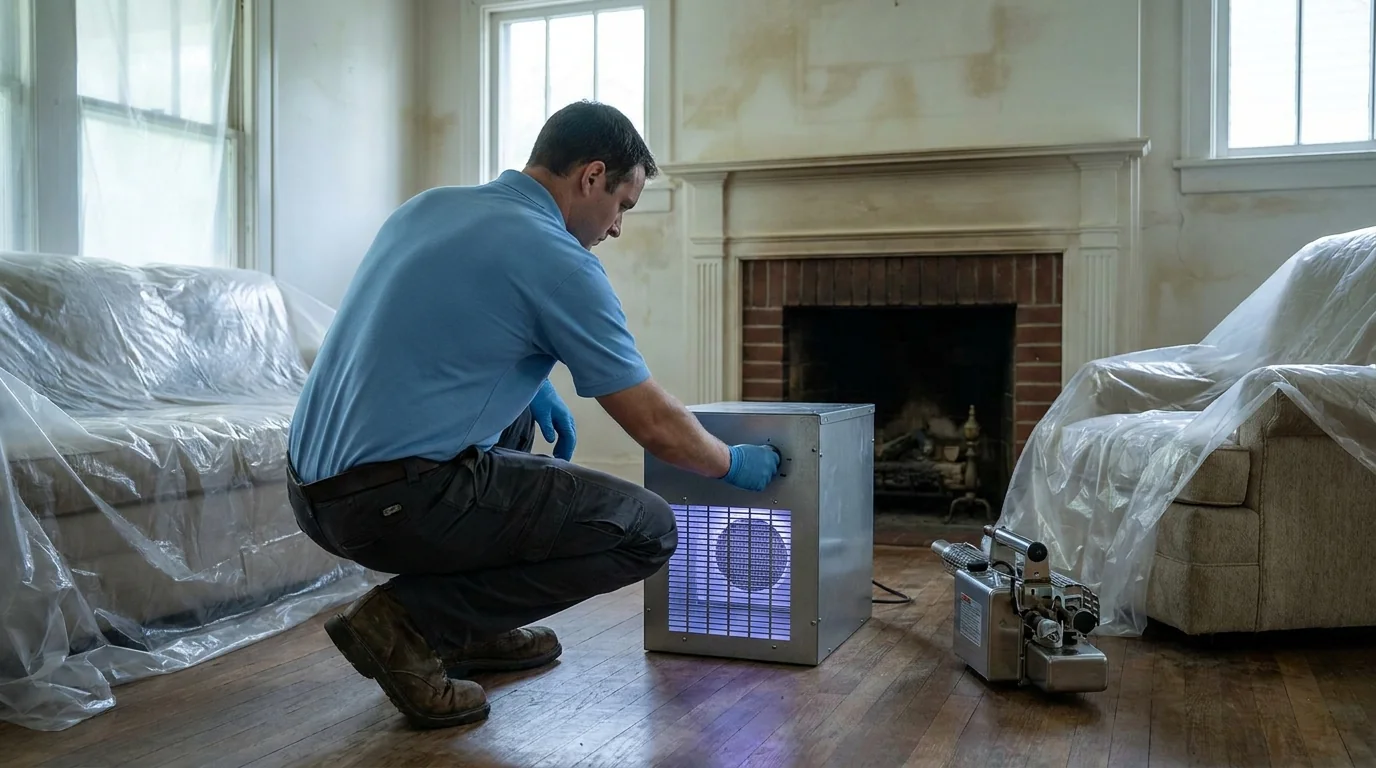
- Thermal fogging penetrates the same microscopic pathways that smoke traveled during a fire — into wall cavities, under trim, into upholstery fibers. It’s particularly effective in the older, irregular construction common in downtown New Brunswick and the George Street corridor, where gaps and voids are plentiful.
- Hydroxyl deodorization uses UV-generated hydroxyl radicals to break down odor-causing molecules at the chemical level. Unlike ozone, hydroxyl generators can run in occupied or partially occupied spaces, which matters in institutional settings near Robert Wood Johnson University Hospital or in commercial properties that can’t afford extended downtime.
- Ozone treatment is reserved for unoccupied spaces with severe odor contamination — fire losses, long-term sewage events, or units with heavy biological odor. We follow IICRC guidelines on concentration and dwell time, then ventilate thoroughly before reoccupancy.
- HEPA air scrubbing and encapsulation rounds out the process for surfaces that have absorbed odors over years rather than a single event.
For properties with plaster walls — common throughout older New Brunswick neighborhoods — we extend treatment dwell times and may apply penetrating encapsulants to the wall surface before any repainting, because plaster will off-gas odor back into a freshly painted room if the substrate isn’t treated.
Reaching New Brunswick from Kenilworth
The Restoration Group operates out of Kenilworth, roughly 12 miles from downtown New Brunswick via the Garden State Parkway to Route 1 or via Route 27 through Edison. Because we run 24/7, a call at 2 a.m. after a kitchen fire on George Street or a burst pipe in a Rutgers Village apartment gets the same response as a mid-morning call — a crew dispatched, not a voicemail.
For commercial losses in the downtown high-rise corridor or institutional properties, we coordinate staging in advance when parking or access is restricted. The dense blocks near the State Theatre New Jersey and the hospital district require that kind of planning, and we’ve learned to make those calls before we arrive rather than after.
Local Note: Plaster Walls and the Odor You Can’t Paint Over
One pattern that comes up repeatedly in New Brunswick’s pre-war housing stock — especially in the rowhouses between the Fifth Ward and the Edgebrook area — is homeowners who repaint after a smoke or water event and find the odor returns within weeks. Plaster is hygroscopic: it absorbs and releases moisture and volatile compounds slowly over time. A fresh coat of latex paint seals the surface temporarily, but as the plaster breathes with seasonal humidity changes (and New Jersey humidity swings are significant), trapped odor molecules migrate back through. The fix isn’t more paint — it’s treating the plaster substrate with a penetrating deodorizing agent before any finish coat goes on. It’s a step that adds time to a job, but skipping it means the odor comes back by the following summer.
If you’re in New Brunswick and dealing with a smell that keeps returning after cleaning or repainting, call (855) 650-7422. Our IICRC Certified Firm team will identify what’s holding the odor and apply the right treatment — not the fastest one.
Serving New Brunswick from our Fair Lawn headquarters — ★ 4.8 · 158 Google reviews
“Teams were very prompt and respectful.. company responded quickly and kept in touch” — Peggy, August 2026Read our reviews on Google →
Odor Removal and Deodorization in New Brunswick: Service Coverage
Frequently Asked Questions
How fast can you arrive for odor removal and deodorization in New Brunswick?
Are older rowhouses near Rutgers Village more difficult to fully deodorize than newer construction?
We had flooding from the Raritan River during Ida and still notice a musty smell in our basement — is that treatable?
Can you deodorize a commercial property on George Street without shutting it down for multiple days?
What's the difference between ozone treatment and hydroxyl deodorization, and which is used in New Brunswick apartments?
Does renters or homeowners insurance typically cover professional odor removal in New Brunswick, and do you help with the claim?
Odor Removal and Deodorization response in New Brunswick
Most New Brunswick calls see a technician on-site within 60 minutes from our Fair Lawn headquarters.