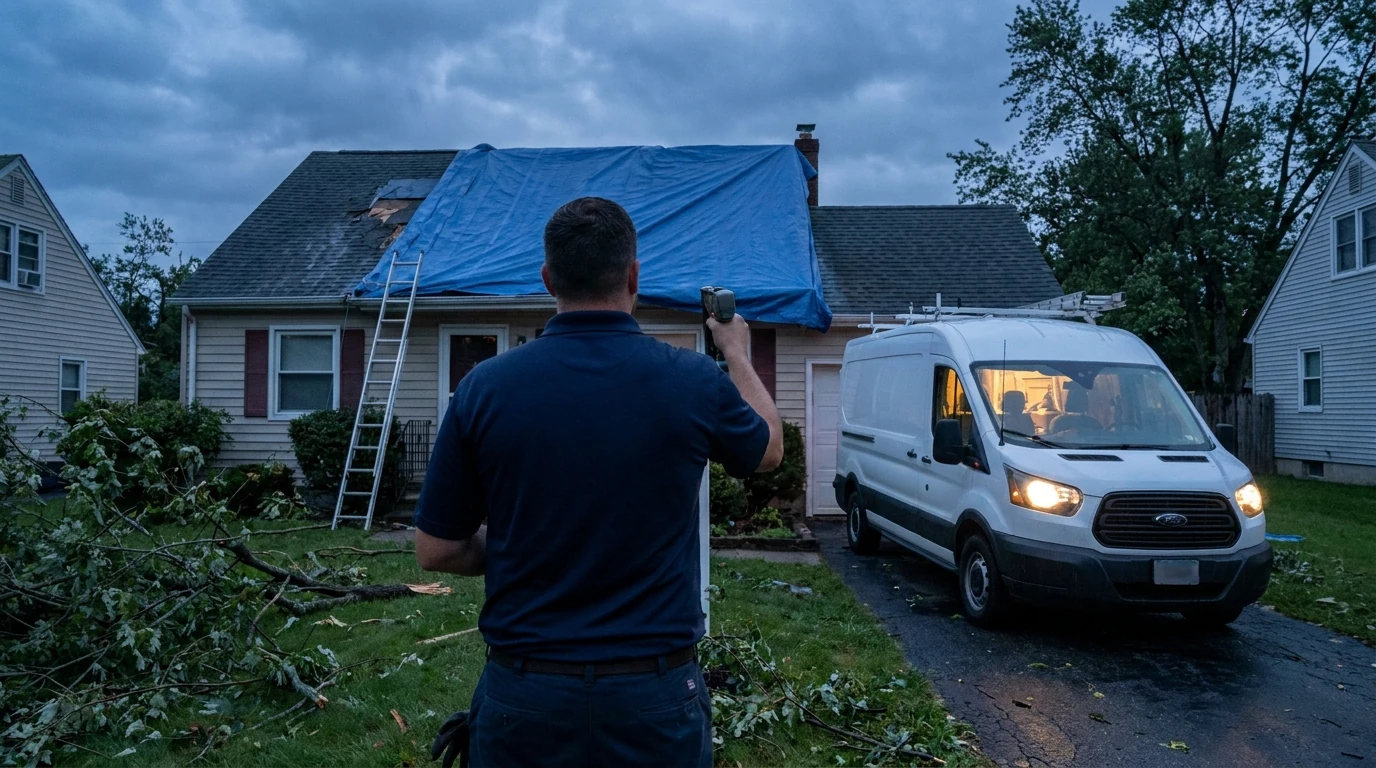
TL;DR: For storm damage in Fair Lawn, call 911 first only if there’s a downed power line, gas smell, or active fire. For a damaged roof, broken windows, or water entering the home, call a 24/7 restoration crew immediately to get a tarp or board-up in place and start water extraction before it gets worse. Call your insurance company after the property is secured, not before, so you can report exact damage with the mitigation already documented.
If a limb just came down through your roof during a storm off the Passaic or Saddle River, or wind-driven rain is pooling under a window near Warren Point or River Road, you need to know the order of calls, not just a phone number. Call (844) 808-8838 for emergency tarping, board-up, and water removal once the scene is safe. The order matters because the wrong first call wastes the hours that actually limit damage.
Who should I call first for storm damage in Fair Lawn?
Call 911 or PSE&G first only if there’s a safety hazard. For everything else, your first call is a 24/7 restoration crew that can tarp the roof, board up openings, and start pulling water before more of the structure gets wet.
The Restoration Group answers that call around the clock as an IICRC Certified Firm, and a Fair Lawn storm call goes to a crew that already knows the borough’s flood history along the Passaic and Saddle Rivers. That local familiarity matters because the first hour after a storm hit is when a contained leak either stays contained or turns into a soaked subfloor.
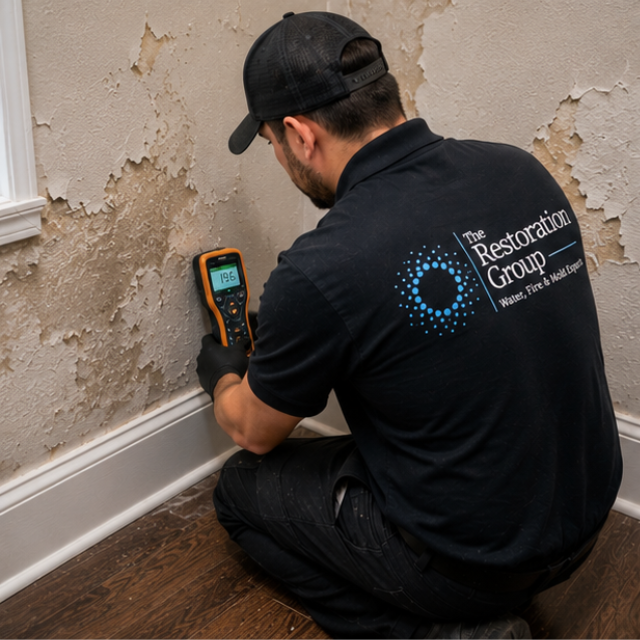
Recent job photo from The Restoration Group.
When is it 911 or the utility instead of a restoration company?
Call 911 immediately for any downed power line, active fire, or structural collapse risk, and call PSE&G for a gas odor or sparking line, before calling anyone else. These are life-safety situations a restoration crew is not equipped or authorized to handle.
If a tree took down a line along the street or your panel is arcing, stay back, keep everyone clear of the area, and make that call first. Once the utility or fire department clears the scene as safe to approach, that’s when a restoration call makes sense.
A tree fell on my roof, what’s the first call after safety is confirmed?
Once the scene is safe, the first call is for emergency tarping, not your insurer and not a roofer searching for a same-day slot. A tarp over an open roof section stops the interior damage clock while you sort out the rest.
A restoration crew doing emergency board-up and tarping will secure the opening with plywood and heavy-gauge tarp, assess whether water already reached the attic insulation or ceiling drywall, and start extraction if it has. Note: this kind of work is mitigation, securing the structure and removing water, not roof replacement or framing repair. Get that stabilized first; the rebuild conversation comes later with your adjuster and a licensed contractor.
Water is coming in right now during the storm, what do I do?
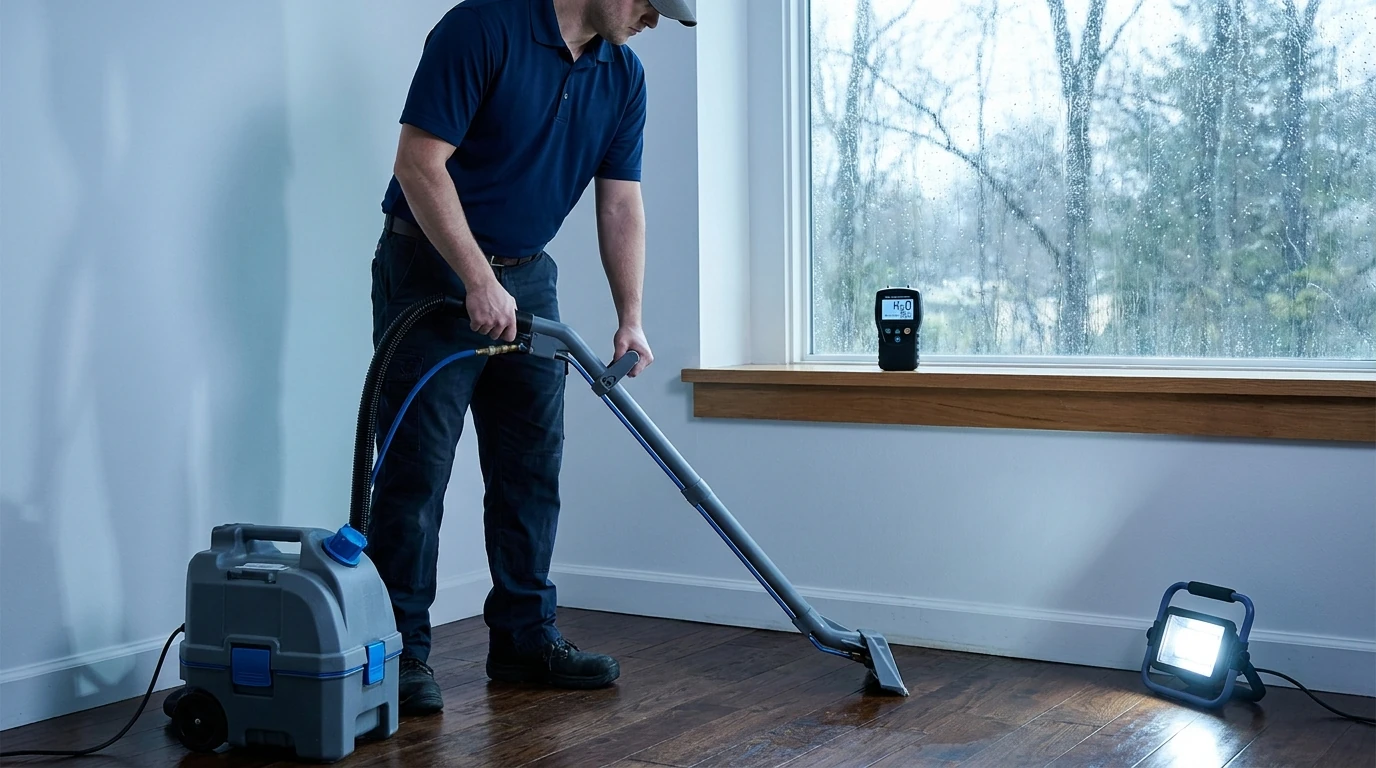
Move anything valuable off the floor and away from the leak, then call for emergency water removal rather than waiting out the storm to see how bad it gets. Standing water and saturated drywall start supporting mold growth within 24 to 48 hours, so delay has a real cost.
If the water is coming from a roof breach or a window seal failure during heavy rain, the leak often continues even after the rain stops, through saturated roofing material or trapped moisture behind siding. A crew with extraction equipment and dehumidifiers can start pulling water and drying the structure the same day, which matters most in Fair Lawn’s older Radburn-era homes and postwar capes where finished basements take the worst of River Road flooding.
When should I call my insurance company?
Call your insurer after the immediate hazard is controlled and emergency mitigation is underway, not as your very first call. Reporting the claim once a restoration crew is already documenting the damage with photos and moisture readings gives the adjuster a cleaner, faster record to work from.
Most homeowners policies cover sudden storm damage like wind-driven roof openings and the resulting water intrusion, though coverage details and deductibles vary by policy. See the Insurance Information Institute’s overview of which disasters are covered by homeowners insurance for the general pattern insurers follow. Before you call, run through our storm damage insurance claim checklist so you know what to document.
What happens when you call for emergency tarping or water removal?
The first call gets a technician on the phone to confirm the address, the type of damage, and whether anyone is in immediate danger, then dispatches a crew for tarping, board-up, or water extraction. Have your address, a description of the opening or leak, and your insurance company’s name ready if you have it.
On arrival, the crew secures any exposed roof or window openings, starts extracting standing water, and sets moisture readings on affected materials before drying equipment goes in. That documentation, timestamped photos and readings, becomes the backbone of your insurance claim.
A storm doesn’t wait for business hours, and neither should the first call that actually limits the damage. Once the structure is secured and water is moving out instead of in, everything else (the claim, the repairs, the paperwork) gets easier.
About The Restoration Group
The Restoration Group is an IICRC Certified Firm (#210213) serving Fair Lawn and the surrounding New Jersey, NYC metro, and eastern Pennsylvania region since 2021, with an office location in Fair Lawn itself. Crews handle water, fire, mold, and storm damage mitigation including emergency tarping, board-up, and water extraction, available 24/7 for Fair Lawn’s recurring Passaic and Saddle River flood events.
Need help now? Call The Restoration Group at (844) 808-8838.